
Science
India Reforms Nuclear Policy with New SHANTI Act to Boost Capacity

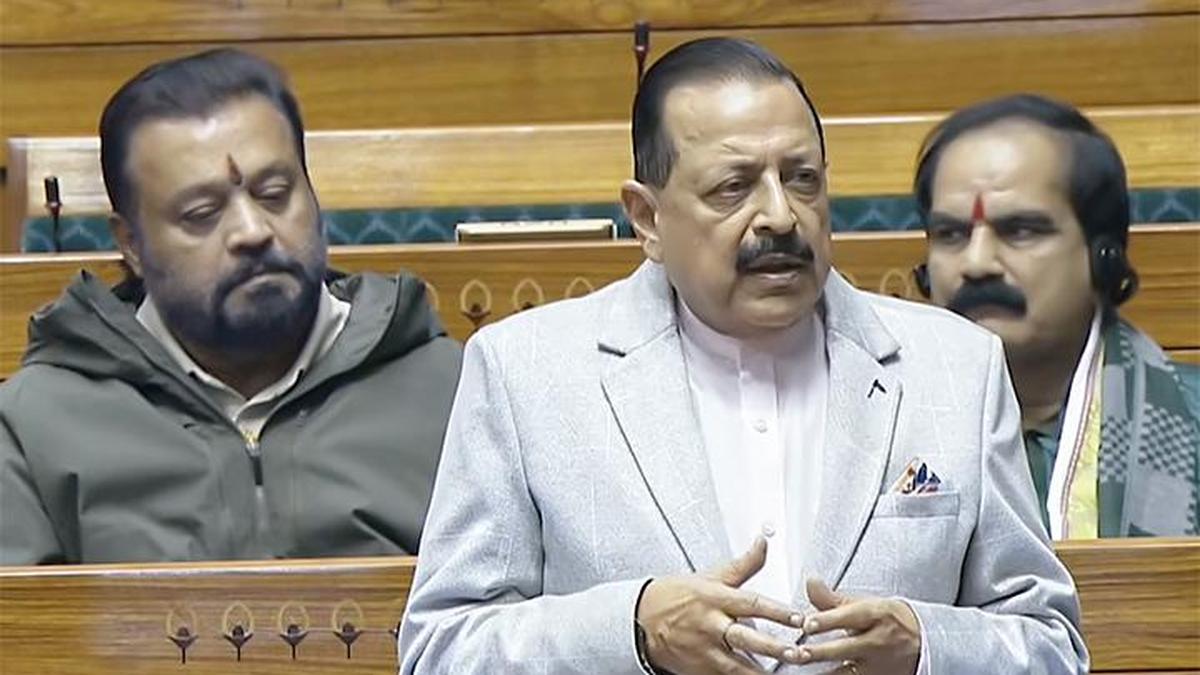
India’s Parliament has enacted the Sustainable Harnessing and Advancement of Nuclear Energy for Transforming India (SHANTI) Act, which replaces the existing Atomic Energy Act of 1962 and the Civil Liability for Nuclear Damage (CLND) Act of 2010. This significant legislative change aims to enhance the country’s nuclear energy capabilities by encouraging private sector participation and enabling foreign investment in the nuclear sector.
The SHANTI Act is particularly important as India seeks to elevate its nuclear power capacity from the current 8.8 GW, which constitutes about 1.5% of the total installed capacity, to an ambitious target of 100 GW by the year 2047. This increase is intended to raise the contribution of nuclear energy to electricity generation from the present 3%. State-owned nuclear utilities have projected they will add around 54 GW, with the remainder expected to come from private enterprises.
Key Changes Under the SHANTI Act
Safety remains a paramount concern in nuclear power operations due to the historical risks associated with nuclear incidents, such as the Three Mile Island accident in 1979, the Chernobyl disaster in 1986, and the Fukushima meltdown caused by a tsunami in 2011. The global consensus mandates that victims of nuclear accidents must receive compensation without delay, regardless of fault. However, plant operators can seek recourse against suppliers if they can prove that defective equipment led to the incident.
The previous CLND Act allowed operators to claim recourse under specific conditions, including instances where fault could be attributed to the supplier. The SHANTI Act eliminates one of these conditions, specifically the need to demonstrate supplier fault, thereby reducing liability concerns for foreign reactor manufacturers. This shift is expected to facilitate greater foreign investment in India’s nuclear sector, which has been cautious due to the potential for significant financial liability.
The SHANTI Act introduces a tiered liability structure for nuclear plant operators. For facilities generating over 3,600 MW, the liability limit is set at ₹3,000 crore; for plants between 3,600 MW and 1,500 MW, it is ₹1,500 crore; for those between 1,500 MW and 750 MW, it is ₹750 crore; for plants generating between 750 MW and 150 MW, the cap is ₹300 crore; and for facilities under 150 MW, the liability is capped at ₹100 crore. Currently, all of India’s operational nuclear plants fall within the 3,000 MW or lower range.
During discussions surrounding the legislation, Minister of Science Jitendra Singh, who spearheaded the introduction of the SHANTI Act, emphasized that this graduated approach aims to attract private sector players without deterring them due to excessive financial liability.
Future Prospects for India’s Nuclear Energy Goals
The vision for India’s nuclear energy program was first articulated by Homi Bhabha, who aimed to secure the nation’s energy needs while addressing uranium scarcity by utilizing thorium. The multi-stage plan involves developing pressurized heavy water reactors to produce plutonium and energy from natural uranium, followed by the introduction of fast breeder reactors to produce more plutonium and uranium-233. The final stage envisions a self-sustaining system using thorium.
India has yet to advance to the second stage of this plan, with the development of a prototype Fast Breeder Reactor delayed for two decades. Originally slated for operational status in 2025, the commissioning has now been postponed to September 2026.
In pursuit of its nuclear objectives, India is also exploring the use of Small Modular Reactors (SMRs). These compact reactors, modeled after existing designs in the United States and France, offer alternative methods for electricity generation but rely on enriched uranium-235, which India does not currently possess. While SMRs can generate electricity, they do not necessarily contribute to India’s long-term goal of utilizing thorium as a fuel source.
As the SHANTI Act takes effect, stakeholders in India’s energy sector will be closely watching its implementation and impact on both domestic power generation capabilities and international investment in the nuclear domain.

Imran Khan Calls for Nationwide Protests After 17-Year Sentence

Stocks Rise as Markets Stabilize; Analysts Recommend Key Buys

Navigating Tax Implications of Under-Construction and Ready Homes

Dinesh Vijan Reflects on Stree’s Success After Initial Rejection

Discover India’s Top 10 Medical Colleges for MBBS in 2026

Discover Stylish Woollen Pants for Women This Winter Season

Jaishankar Highlights India’s Growing Global Influence at Convocation

India Reforms Nuclear Policy with New SHANTI Act to Boost Capacity

Paige Bueckers and Dominique Malonga Team Up for Unrivaled Action

SBI Announces QIP Floor Price at ₹811.05 Per Share

Cept Unveils ₹3.1 Crore Urban Mobility Plan for Sustainable Growth

New Blood Group Discovered in South Indian Woman at Rotary Centre

Torrential Rains Cause Flash Flooding in New York and New Jersey

Konkani Cultural Organisation to Host Pearl Jubilee in Abu Dhabi

Broad Advocates for Bowling Change Ahead of Final Test Against India

Nothing Headphone 1 Review: A Bold Contender in Audio Design

Air India Crash Investigation Highlights Boeing Fuel Switch Concerns

Indian Stock Market Rebounds: Sensex and Nifty Rise After Four-Day Decline
-
 World5 months ago
SBI Announces QIP Floor Price at ₹811.05 Per Share
-
 Lifestyle5 months ago
Cept Unveils ₹3.1 Crore Urban Mobility Plan for Sustainable Growth
-
 Science5 months ago
New Blood Group Discovered in South Indian Woman at Rotary Centre
-
 World5 months ago
Torrential Rains Cause Flash Flooding in New York and New Jersey
-
 Top Stories5 months ago
Konkani Cultural Organisation to Host Pearl Jubilee in Abu Dhabi
-
 Sports5 months ago
Broad Advocates for Bowling Change Ahead of Final Test Against India
-
 Science5 months ago
Nothing Headphone 1 Review: A Bold Contender in Audio Design
-
 Top Stories5 months ago
Air India Crash Investigation Highlights Boeing Fuel Switch Concerns
-
 Business5 months ago
Indian Stock Market Rebounds: Sensex and Nifty Rise After Four-Day Decline
-

 Sports5 months ago
Cristian Totti Retires at 19: Pressure of Fame Takes Toll
-

 Politics5 months ago
Abandoned Doberman Finds New Home After Journey to Prague
-

 Top Stories5 months ago
Patna Bank Manager Abhishek Varun Found Dead in Well