
World
US Seizes Oil Tanker Near Venezuela, Heightening Tensions

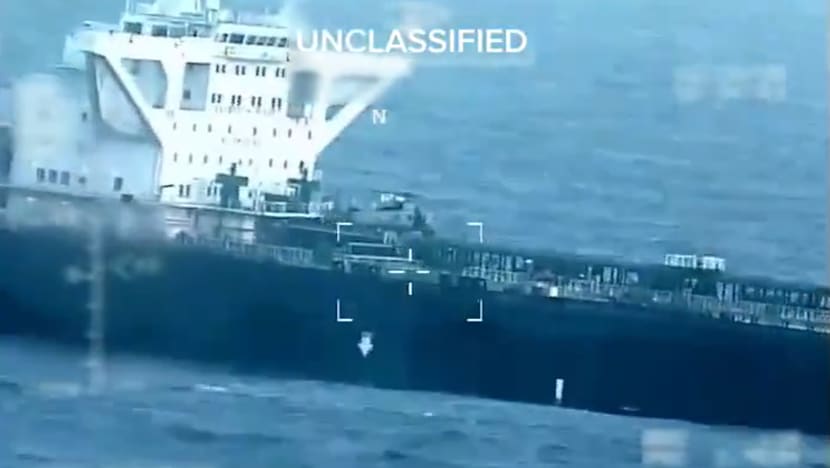
The United States seized an oil tanker off the coast of Venezuela in international waters, according to a statement from United States Homeland Security Secretary Kristi Noem on December 20, 2023. This action follows a recent announcement by US President Donald Trump, who declared a “blockade” on all sanctioned oil tankers entering and exiting Venezuela. The seizure marks the second time in a matter of weeks that the US has acted against vessels near the Venezuelan coast amid a significant military buildup in the region.
Noem confirmed that the US Coast Guard intercepted a vessel that had last docked in Venezuela. “The United States will continue to pursue the illicit movement of sanctioned oil that is used to fund narco-terrorism in the region,” she stated. “We will find you, and we will stop you.” Reports from three US officials indicated to Reuters that the vessel had indeed been seized. The Coast Guard and Pentagon directed inquiries to the White House, which has yet to respond to requests for comment. Venezuela’s oil ministry and the state oil company, PDVSA, also did not provide immediate responses.
According to Vanguard, a British maritime risk management company, the intercepted vessel is believed to be the Panama-flagged Centuries, intercepted east of Barbados in the Caribbean Sea. Notably, Jeremy Paner, a partner at the Washington DC law firm Hughes Hubbard and a former OFAC investigator, pointed out that the vessel itself is not subject to US sanctions. “The seizure of a vessel that is not sanctioned by the US marks a further increase in Trump’s pressure on Venezuela,” he remarked. “It also runs counter to Trump’s statement that the US would impose a blockade of all sanctioned oil tankers.”
Trump’s Blockade Announcement and Market Impacts
On December 17, Trump ordered “a total and complete blockade of all sanctioned oil tankers going into and out of Venezuela.” Following the seizure of a sanctioned oil tanker off the Venezuelan coast the previous week, an effective embargo has been established. Loaded vessels carrying millions of barrels of oil have remained in Venezuelan waters, avoiding potential confiscation. Since the initial seizure, Venezuelan crude exports have plummeted.
While numerous vessels engaged in oil transport from Venezuela are subject to US sanctions, others carrying oil from Iran and Russia operate without restrictions. Chevron, a major American corporation, continues to facilitate the transport of Venezuelan oil using its authorized vessels. China remains the largest importer of Venezuelan crude, accounting for roughly 4 percent of its oil imports, with December shipments projected to average over 600,000 barrels per day, according to analysts.
Currently, the oil market is adequately supplied, with millions of barrels of oil on tankers offshore, particularly near China. Should the embargo persist, the loss of nearly 1 million barrels per day from Venezuelan exports could lead to increased oil prices.
Since the US imposed energy sanctions on Venezuela in 2019, traders and refiners purchasing Venezuelan oil have turned to a “shadow fleet” of tankers that obscure their locations. Analysts indicate that this fleet, which includes vessels sanctioned for transporting oil from Iran or Russia, remains vulnerable to potential punitive actions by the US.
The Centuries, which loaded oil in Venezuela under the alias “Crag,” is part of this shadow fleet and was reportedly transporting approximately 1.8 million barrels of Venezuelan Merey crude oil destined for China. Internal documents from PDVSA confirm the oil was sold to Satau Tijana Oil Trading, one of several intermediaries involved in PDVSA’s transactions with independent Chinese refiners. Satellite imagery indicates that the vessel departed Venezuelan waters on December 19, 2023, after a brief escort by the Venezuelan navy.
As of this week, out of more than 70 oil tankers in Venezuelan waters identified as part of the shadow fleet, around 38 are currently under US Treasury sanctions. At least 15 of these vessels are loaded with crude and fuel.
Trump’s intensified campaign against Venezuelan President Nicolas Maduro includes an augmented military presence in the region alongside over two dozen military strikes on vessels in the Pacific Ocean and Caribbean Sea, resulting in significant fatalities. Maduro has accused the US of attempting to overthrow his government and seize control of Venezuela’s vast oil reserves, which are among the largest in the world.
As the situation evolves, the international community watches closely, with implications not only for US-Venezuela relations but also for global oil markets.

Imran Khan Calls for Nationwide Protests After 17-Year Sentence

Stocks Rise as Markets Stabilize; Analysts Recommend Key Buys

Navigating Tax Implications of Under-Construction and Ready Homes

Dinesh Vijan Reflects on Stree’s Success After Initial Rejection

Discover India’s Top 10 Medical Colleges for MBBS in 2026

Discover Stylish Woollen Pants for Women This Winter Season

Jaishankar Highlights India’s Growing Global Influence at Convocation

India Reforms Nuclear Policy with New SHANTI Act to Boost Capacity

Paige Bueckers and Dominique Malonga Team Up for Unrivaled Action

SBI Announces QIP Floor Price at ₹811.05 Per Share

Cept Unveils ₹3.1 Crore Urban Mobility Plan for Sustainable Growth

New Blood Group Discovered in South Indian Woman at Rotary Centre

Torrential Rains Cause Flash Flooding in New York and New Jersey

Konkani Cultural Organisation to Host Pearl Jubilee in Abu Dhabi

Broad Advocates for Bowling Change Ahead of Final Test Against India

Nothing Headphone 1 Review: A Bold Contender in Audio Design

Air India Crash Investigation Highlights Boeing Fuel Switch Concerns

Indian Stock Market Rebounds: Sensex and Nifty Rise After Four-Day Decline
-
 World5 months ago
SBI Announces QIP Floor Price at ₹811.05 Per Share
-
 Lifestyle5 months ago
Cept Unveils ₹3.1 Crore Urban Mobility Plan for Sustainable Growth
-
 Science5 months ago
New Blood Group Discovered in South Indian Woman at Rotary Centre
-
 World5 months ago
Torrential Rains Cause Flash Flooding in New York and New Jersey
-
 Top Stories5 months ago
Konkani Cultural Organisation to Host Pearl Jubilee in Abu Dhabi
-
 Sports5 months ago
Broad Advocates for Bowling Change Ahead of Final Test Against India
-
 Science5 months ago
Nothing Headphone 1 Review: A Bold Contender in Audio Design
-
 Top Stories5 months ago
Air India Crash Investigation Highlights Boeing Fuel Switch Concerns
-
 Business5 months ago
Indian Stock Market Rebounds: Sensex and Nifty Rise After Four-Day Decline
-

 Sports5 months ago
Cristian Totti Retires at 19: Pressure of Fame Takes Toll
-

 Politics5 months ago
Abandoned Doberman Finds New Home After Journey to Prague
-

 Top Stories5 months ago
Patna Bank Manager Abhishek Varun Found Dead in Well