
Science
India Launches SHANTI Act to Transform Nuclear Energy Landscape

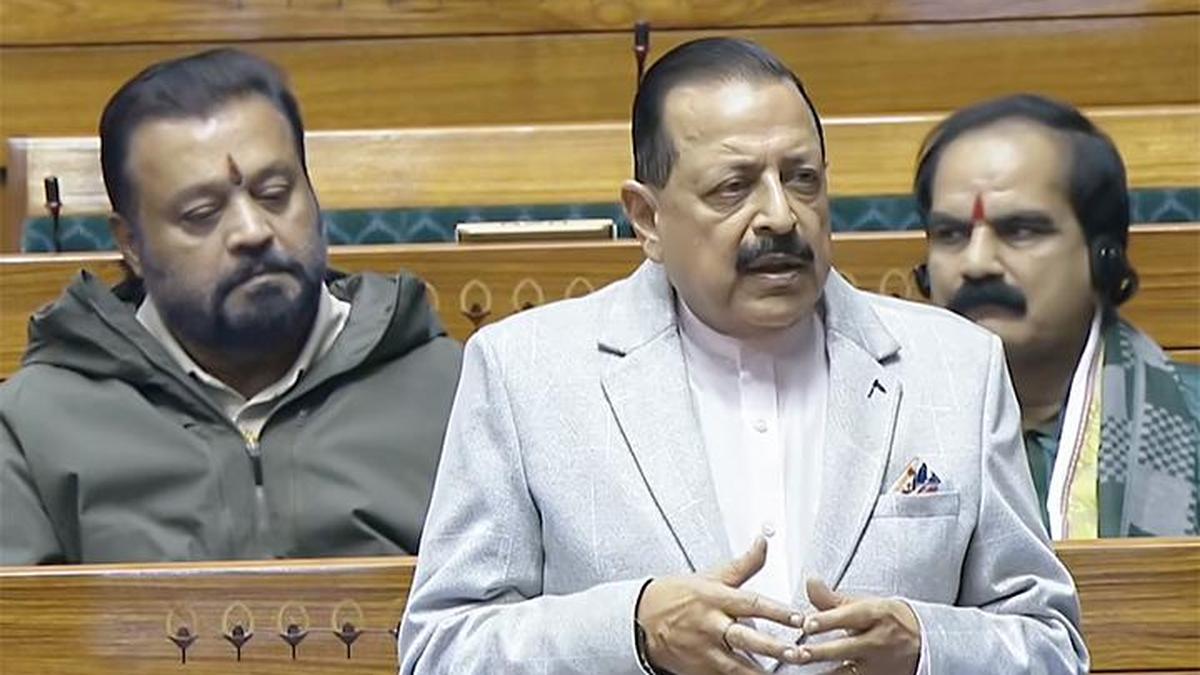
Parliament in India has enacted the Sustainable Harnessing and Advancement of Nuclear Energy for Transforming India (SHANTI) Act, which replaces the existing legislative frameworks governing nuclear activities, specifically the Atomic Energy Act of 1962 and the Civil Liability for Nuclear Damage Act of 2010. This new legislation is poised to reshape the nuclear energy sector by promoting private sector involvement and potentially attracting foreign investment.
The SHANTI Act is significant for its goal to elevate India’s nuclear capacity from the current 8.8 GW—representing about 1.5% of the total installed power—to 100 GW by 2047. This ambitious target aims to increase the contribution of nuclear energy to electricity generation from the current 3%. State-owned nuclear utilities project that they will add approximately 54 GW, with the balance expected from private enterprises.
Key Changes Introduced by SHANTI
Safety remains a primary concern in nuclear energy operations, especially given the historical context marked by incidents such as the Three Mile Island disaster in 1979, the Chernobyl nuclear meltdown in 1986, and the Fukushima crisis in 2011. The global consensus mandates that plant operators must compensate victims for damages in the event of an accident, with payments often exceeding initial estimates. Under the SHANTI Act, plant operators must provide immediate compensation without delay while retaining the right to seek recourse if they can demonstrate that the incident was caused by faulty equipment from a supplier.
One of the most notable alterations in the SHANTI Act is the removal of a critical clause from previous legislation. The prior Civil Liability for Nuclear Damage Act allowed operators to seek recourse from equipment suppliers only if they could prove that the incident was due to the supplier’s fault. This clause has been eliminated in the SHANTI Act, effectively reducing the liability burden on reactor manufacturers. This change is expected to encourage foreign companies, particularly from the United States and France, to invest in India’s nuclear sector.
The previous liability cap for nuclear damage was set at ₹1,500 crore (approximately $180 million), with additional support from the government through an insurance pool of up to ₹4,000 crore (around $480 million). The SHANTI Act introduces a graded liability system, where operators of plants exceeding 3,600 MW face a penalty of ₹3,000 crore, while those in lower capacity brackets face decreasing penalties. This approach aims to make participation in the sector less daunting for private companies, as stated by Jitendra Singh, the Minister of Science and Technology.
Future Prospects for India’s Nuclear Energy Goals
The vision for India’s nuclear energy program was initially set forth by Homi Bhabha, who aimed to ensure energy security through nuclear power and address the country’s uranium scarcity via thorium utilization. The program is designed to progress through a three-stage process involving the use of pressurized heavy water reactors and fast breeder reactors, ultimately leading to a thorium-based power generation system.
Currently, India has not yet advanced to the second stage of its nuclear program, with the development of a prototype Fast Breeder Reactor delayed by two decades. The new target for its commissioning has been pushed to September 2026. For its nuclear ambitions, India is also considering the adoption of Small Modular Reactors (SMRs), which are smaller versions of existing reactors in the U.S. and France. Although SMRs offer advantages in terms of flexibility and modular construction, they require enriched uranium-235, which India does not currently possess, and they do not significantly improve nuclear waste management over larger reactors.
The SHANTI Act represents a pivotal moment for India’s nuclear ambitions, providing a framework that could potentially attract private investment and accelerate the country’s nuclear development. The long-term impact of this legislation will hinge on its implementation and the willingness of the private sector to engage in a historically cautious environment.

Imran Khan Calls for Nationwide Protests After 17-Year Sentence

Stocks Rise as Markets Stabilize; Analysts Recommend Key Buys

Navigating Tax Implications of Under-Construction and Ready Homes

Dinesh Vijan Reflects on Stree’s Success After Initial Rejection

Discover India’s Top 10 Medical Colleges for MBBS in 2026

Discover Stylish Woollen Pants for Women This Winter Season

Jaishankar Highlights India’s Growing Global Influence at Convocation

India Reforms Nuclear Policy with New SHANTI Act to Boost Capacity

Paige Bueckers and Dominique Malonga Team Up for Unrivaled Action

SBI Announces QIP Floor Price at ₹811.05 Per Share

Cept Unveils ₹3.1 Crore Urban Mobility Plan for Sustainable Growth

New Blood Group Discovered in South Indian Woman at Rotary Centre

Torrential Rains Cause Flash Flooding in New York and New Jersey

Konkani Cultural Organisation to Host Pearl Jubilee in Abu Dhabi

Broad Advocates for Bowling Change Ahead of Final Test Against India

Nothing Headphone 1 Review: A Bold Contender in Audio Design

Air India Crash Investigation Highlights Boeing Fuel Switch Concerns

Indian Stock Market Rebounds: Sensex and Nifty Rise After Four-Day Decline
-
 World5 months ago
SBI Announces QIP Floor Price at ₹811.05 Per Share
-
 Lifestyle5 months ago
Cept Unveils ₹3.1 Crore Urban Mobility Plan for Sustainable Growth
-
 Science5 months ago
New Blood Group Discovered in South Indian Woman at Rotary Centre
-
 World5 months ago
Torrential Rains Cause Flash Flooding in New York and New Jersey
-
 Top Stories5 months ago
Konkani Cultural Organisation to Host Pearl Jubilee in Abu Dhabi
-
 Sports5 months ago
Broad Advocates for Bowling Change Ahead of Final Test Against India
-
 Science5 months ago
Nothing Headphone 1 Review: A Bold Contender in Audio Design
-
 Top Stories5 months ago
Air India Crash Investigation Highlights Boeing Fuel Switch Concerns
-
 Business5 months ago
Indian Stock Market Rebounds: Sensex and Nifty Rise After Four-Day Decline
-

 Sports5 months ago
Cristian Totti Retires at 19: Pressure of Fame Takes Toll
-

 Politics5 months ago
Abandoned Doberman Finds New Home After Journey to Prague
-

 Top Stories5 months ago
Patna Bank Manager Abhishek Varun Found Dead in Well