
Science
India Transforms Disease Surveillance with AI-Driven Model

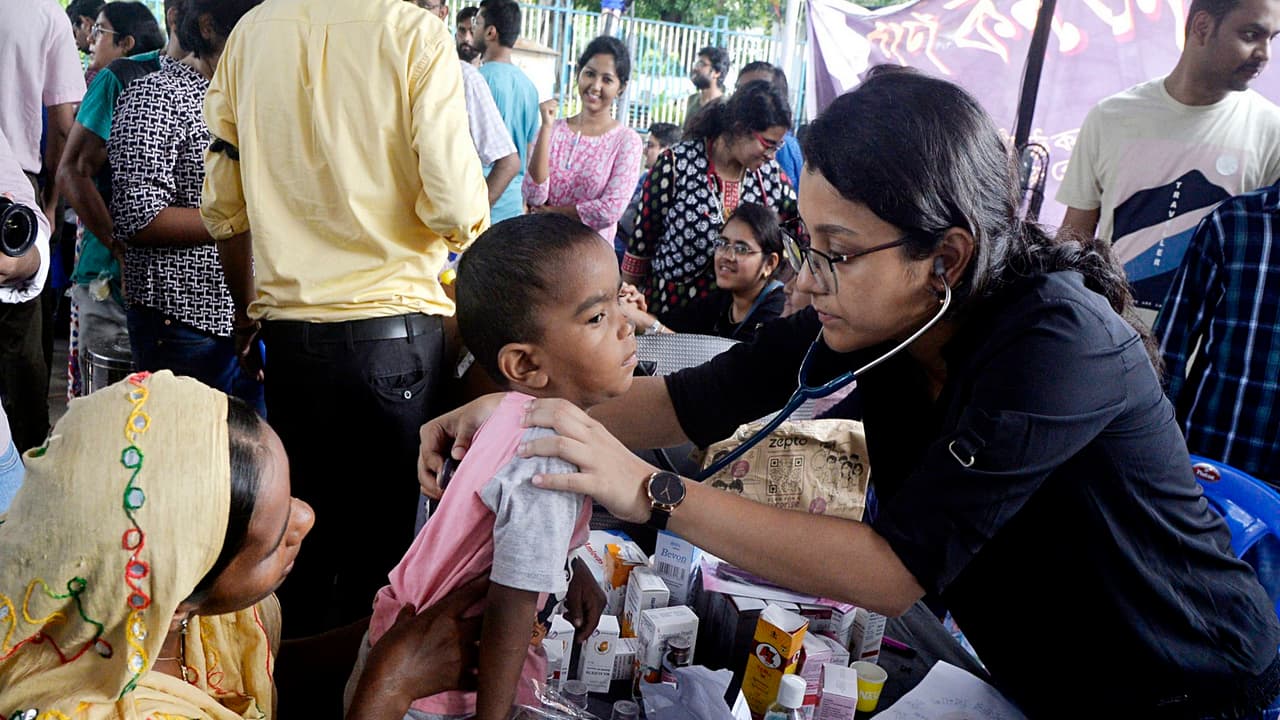
India is set to enhance its public health security significantly by shifting from traditional disease surveillance methods to a predictive model that incorporates artificial intelligence (AI) and real-time data analytics. This innovative approach aims to identify and forecast potential outbreaks before they develop into larger public health crises, enabling quicker and more effective responses.
AI-Powered Predictive Surveillance
Officials at the National Centre for Disease Control (NCDC) confirmed that this transition builds on the success of AI-based event surveillance systems already operational within the Integrated Health Information Platform (IHIP) of the Integrated Disease Surveillance Programme (IDSP). The Media Scanning and Verification Cell (MSVC) has been utilizing an AI-powered system that scans millions of news reports daily across 13 Indian languages. This technology extracts structured health event data, including disease type, location, and scale.
Since 2022, the system has processed over 300 million news articles, flagging more than 95,000 unique health-related events. This represents a 150 percent increase in detection capacity compared to manual systems, while also reducing the workload for surveillance teams by 98 percent. The technology, known as Health Sentinel, acts as a “digital watchdog,” automatically identifying unusual spikes in diseases such as dengue and chikungunya, which are then verified by public health experts.
Real-Time Surveillance Capabilities
The move towards predictive surveillance is poised to leverage these advanced analytical capabilities to forecast disease trends, enabling interventions even before the first case is reported. This strategy marks a significant advancement in India’s pandemic preparedness. Recently, the newly established Metropolitan Surveillance Units (MSUs) demonstrated their effectiveness during an incident involving suspected cases of paediatric Acute Encephalitis Syndrome (AES) in Chhindwara district, Madhya Pradesh. The MSU in Nagpur promptly alerted the Central Surveillance Unit, facilitating fast coordination among stakeholders across two states.
This rapid response was made possible through the swift deployment of the National Joint Outbreak Response Team (NJORT), in collaboration with the Indian Council of Medical Research (ICMR), the National Institute of Epidemiology (NIE), and the Central Drugs Standard Control Organization (CDSCO). Such incidents highlight the evolving capacity of India’s surveillance ecosystem to detect unusual clinical patterns and initiate early interventions, even in densely populated urban settings.
This collaborative focus is further reinforced by the efforts of the IDSP and NCDC, emphasizing the importance of collective surveillance strategies.
Experts are optimistic that the upcoming predictive model will integrate various data sources, including AI surveillance, laboratory intelligence, climatic data, and patterns of population movement. This proactive disease intelligence network will empower health authorities to:
- Detect early warning signals before symptoms manifest.
- Rapidly mobilize resources and field teams.
- Strengthen risk mitigation at the district level.
- Prevent large-scale outbreaks through advanced forecasting.
Officials stress that this transition aligns with the Government’s vision of establishing a future-ready public health system. This system is designed to enhance national preparedness against infectious diseases, health risks related to climate change, and potential pandemics. As India progresses towards this predictive model, the integration of AI-driven surveillance and technology-enabled rapid response mechanisms holds the promise of significantly improving health security, potentially saving thousands of lives through timely and targeted action.
“From being reactive to becoming anticipatory, the future of disease surveillance in India is now data-driven, intelligent, and predictive,” stated a government spokesperson.

Charges Filed Against Sushil Kumar in IGP Bribery Case

BSF Foils Four Infiltration Attempts, Neutralizes Eight Terrorists

New Tax Bill Targets Pan Masala, Gutkha to Fund Health and Defence

Samantha Ruth Prabhu Ties the Knot with Raj Nidimoru in Intimate Ceremony

ChatGPT 5 Raises Alarm for Mental Health Guidance Failures

Ayurveda Offers Natural Solutions to Combat Urban Smog Challenges

Voter Roll Overhaul Sparks Crisis as BLOs Face Heavy Strain

India Takes Steps to Boost Rare-Earth Magnet Production Amid Dependency

Washington Sundar Struggles at No. 5 in India’s ODI Loss to South Africa

SBI Announces QIP Floor Price at ₹811.05 Per Share

Cept Unveils ₹3.1 Crore Urban Mobility Plan for Sustainable Growth

New Blood Group Discovered in South Indian Woman at Rotary Centre

Torrential Rains Cause Flash Flooding in New York and New Jersey

Konkani Cultural Organisation to Host Pearl Jubilee in Abu Dhabi

Broad Advocates for Bowling Change Ahead of Final Test Against India

Nothing Headphone 1 Review: A Bold Contender in Audio Design

Air India Crash Investigation Highlights Boeing Fuel Switch Concerns

Indian Stock Market Rebounds: Sensex and Nifty Rise After Four-Day Decline
-
 World5 months ago
SBI Announces QIP Floor Price at ₹811.05 Per Share
-
 Lifestyle5 months ago
Cept Unveils ₹3.1 Crore Urban Mobility Plan for Sustainable Growth
-
 Science4 months ago
New Blood Group Discovered in South Indian Woman at Rotary Centre
-
 World5 months ago
Torrential Rains Cause Flash Flooding in New York and New Jersey
-
 Top Stories5 months ago
Konkani Cultural Organisation to Host Pearl Jubilee in Abu Dhabi
-
 Sports4 months ago
Broad Advocates for Bowling Change Ahead of Final Test Against India
-
 Science5 months ago
Nothing Headphone 1 Review: A Bold Contender in Audio Design
-
 Top Stories5 months ago
Air India Crash Investigation Highlights Boeing Fuel Switch Concerns
-
 Business5 months ago
Indian Stock Market Rebounds: Sensex and Nifty Rise After Four-Day Decline
-

 Sports4 months ago
Cristian Totti Retires at 19: Pressure of Fame Takes Toll
-

 Politics5 months ago
Abandoned Doberman Finds New Home After Journey to Prague
-
 Top Stories5 months ago
Patna Bank Manager Abhishek Varun Found Dead in Well