
Politics
Winter Chest Infections Surge as Cold Weather Hits Kashmir

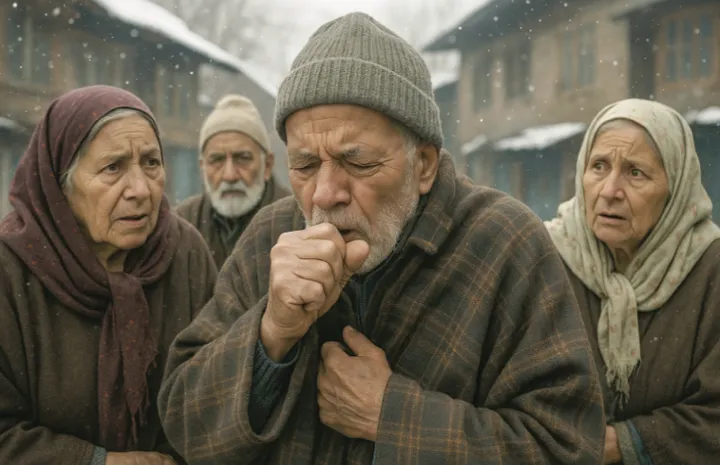
As winter settles in Kashmir, an alarming rise in chest infections has prompted health professionals to issue warnings about the vulnerability of specific groups, particularly the elderly and young children. Reports from local clinics indicate a surge in cases, with families seeking urgent medical attention for persistent coughs and breathing difficulties. This year, the cold has arrived abruptly, catching many unprepared and exacerbating underlying health issues.
Understanding the Risks of Kashmir’s Winter
Kashmir’s winter poses unique challenges, differing significantly from winter conditions elsewhere. The region’s beauty is often overshadowed by its health hazards, particularly for those with compromised respiratory systems. Several factors contribute to this heightened risk:
1. **Indoor Smoke**: The use of bukharis, coal stoves, and gas heaters fills homes with warm air, but also with harmful particles that irritate the lungs. Elderly individuals, who often have fragile airways, are particularly affected by these pollutants.
2. **Poor Ventilation**: To combat the cold, families seal their homes tightly, relying on blankets and polythene sheets. This practice, while effective for warmth, traps dust, smoke, and moisture, creating an environment conducive to respiratory infections.
3. **Temperature Fluctuations**: Transitioning quickly from a warm room to the freezing outdoors can shock the airways. This sudden exposure is a major trigger for chest infections, asthma, and flare-ups of Chronic Obstructive Pulmonary Disease (COPD).
The impact is particularly severe for the elderly, who often downplay symptoms, attributing them to seasonal changes. What may begin as a simple cough can escalate into serious conditions like pneumonia or dangerously low oxygen levels. According to global statistics, winter is the deadliest season for seniors with respiratory illnesses, and Kashmir faces extended winter months.
Impacts on Children and Strategies for Prevention
Children are also at high risk during this season. Their smaller lungs and narrower airways make them more susceptible to rapid deterioration in respiratory health. Many parents mistakenly believe that a persistent cough is merely a seasonal issue. Symptoms that persist can indicate serious conditions such as viral bronchiolitis or pneumonia.
This year’s early onset of winter has led to a notable increase in the number of children suffering from severe chest infections. These developments underscore the importance of awareness, especially during November, which is recognized as World COPD Awareness Month. COPD is often misunderstood as a condition related solely to aging, yet in Kashmir, factors such as indoor pollution and childhood respiratory infections contribute significantly to its prevalence.
To combat these health challenges, families are encouraged to adopt several practical measures:
– **Designate a Warm Room**: Select one room in the home for seniors and children, ensuring it remains warm and well-ventilated by opening a window briefly each day.
– **Use Proper Heating Techniques**: When using a kangri, a traditional fire pot, ensure it is properly burned to minimize smoke. Teach users to maintain a safe distance to prevent respiratory irritation.
– **Regular Ventilation**: Open doors slightly for brief intervals to allow fresh air into the home while keeping the warmth inside.
– **Indoor Exercise**: Encourage physical activity within the home to promote lung health. Simple walking routes can be established in long corridors or hallways.
– **Steam Cautiously**: While steam can alleviate respiratory discomfort, it should be used judiciously to avoid burns. Gentle steaming for short periods can be beneficial.
– **Monitor Air Quality**: Placing bowls of water near heat sources can help maintain humidity levels and prevent dryness that can trigger coughing.
– **Cough Watch**: If a cough persists for more than 72 hours or if breathing becomes labored, seek medical intervention immediately.
Additionally, residents should be aware of the heightened pollution levels during the early morning hours, particularly between 5 am and 9 am, and keep vulnerable individuals indoors during this time.
The message is clear: vigilance is essential during these cold months. By taking simple precautions and recognizing the signs of respiratory distress, families can protect their loved ones from the harsh realities of winter in Kashmir.

Swiss Voters Reject Hefty Inheritance Tax Amid Public Opposition

Archaeologists Uncover 2,000-Year-Old Papyrus in Egyptian Coffin

Bijan Robinson Dominates Week 13, Davante Adams Sets New Record

Stockton Mass Shooting Claims Four Lives; Mayor Issues Stark Warning

Health Insights for December 1, 2025: Wellness Predictions for All Signs

Indian Government Supports Air Passengers in ₹50,000 Crore Suit

Shehbaz Badesha Eliminated from Bigg Boss 19; Amaal Mallik Reacts

India to Introduce New Cess on Tobacco and Pan Masala Products

Ram Kamal Mukherjee Celebrates Cinema at IFFI 2025

SBI Announces QIP Floor Price at ₹811.05 Per Share

Cept Unveils ₹3.1 Crore Urban Mobility Plan for Sustainable Growth

New Blood Group Discovered in South Indian Woman at Rotary Centre

Torrential Rains Cause Flash Flooding in New York and New Jersey

Konkani Cultural Organisation to Host Pearl Jubilee in Abu Dhabi

Broad Advocates for Bowling Change Ahead of Final Test Against India

Nothing Headphone 1 Review: A Bold Contender in Audio Design

Air India Crash Investigation Highlights Boeing Fuel Switch Concerns

Indian Stock Market Rebounds: Sensex and Nifty Rise After Four-Day Decline
-
 World5 months ago
SBI Announces QIP Floor Price at ₹811.05 Per Share
-
 Lifestyle5 months ago
Cept Unveils ₹3.1 Crore Urban Mobility Plan for Sustainable Growth
-
 Science4 months ago
New Blood Group Discovered in South Indian Woman at Rotary Centre
-
 World5 months ago
Torrential Rains Cause Flash Flooding in New York and New Jersey
-
 Top Stories5 months ago
Konkani Cultural Organisation to Host Pearl Jubilee in Abu Dhabi
-
 Sports4 months ago
Broad Advocates for Bowling Change Ahead of Final Test Against India
-
 Science5 months ago
Nothing Headphone 1 Review: A Bold Contender in Audio Design
-
 Top Stories5 months ago
Air India Crash Investigation Highlights Boeing Fuel Switch Concerns
-
 Business5 months ago
Indian Stock Market Rebounds: Sensex and Nifty Rise After Four-Day Decline
-

 Sports4 months ago
Cristian Totti Retires at 19: Pressure of Fame Takes Toll
-

 Politics5 months ago
Abandoned Doberman Finds New Home After Journey to Prague
-

 Top Stories5 months ago
Patna Bank Manager Abhishek Varun Found Dead in Well