
Science
Supreme Court Committee Proposes Phased Goa Tiger Reserve Creation

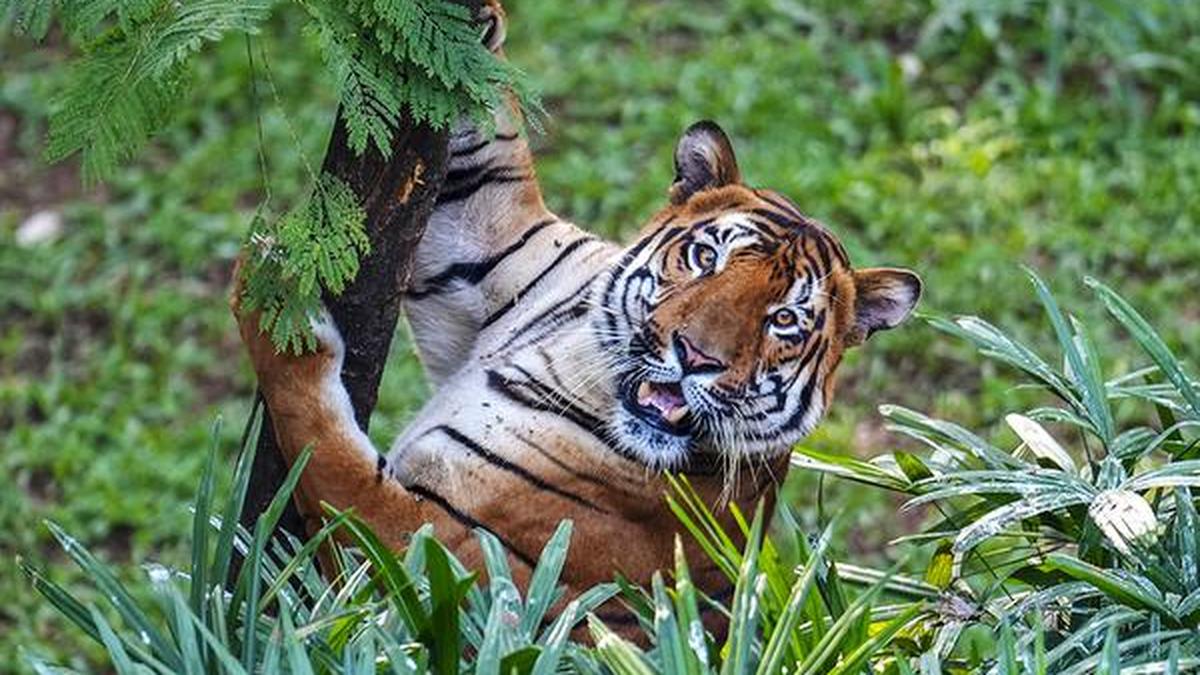
A committee appointed by the Supreme Court of India has put forward a plan for the establishment of a tiger reserve in Goa, advocating for a phased approach that prioritizes areas with lower human presence. This recommendation is part of a report from the Central Empowered Committee (CEC), which the Supreme Court is expected to review during its next hearing regarding a legal dispute involving the Goa government and the Goa Foundation, a non-governmental organization.
The CEC’s involvement follows a July 2023 ruling by the Bombay High Court, which mandated the Goa government to designate five protected areas—namely, the Mhadei Wildlife Sanctuary, Bhagwan Mahavir Wildlife Sanctuary, Bhagwan Mahavir National Park, Netravali Wildlife Sanctuary, and Cotigao Wildlife Sanctuary—as a tiger reserve within three months. This directive came in response to a petition from the Goa Foundation, triggered by the deaths of a female tiger and three cubs in the Mhadei Sanctuary in January 2020, allegedly due to poisoning.
The Goa government initially expressed reluctance, claiming that nearly “one lakh people” would be impacted by such a declaration. However, it later acknowledged in its affidavit that only about 1,274 households, translating to approximately 5,000 to 6,000 individuals, reside in the affected areas. The government also contended that there are no “resident” tigers in Goa, arguing that the few that traverse its forests are part of a transient population.
Concerns and Recommendations
The CEC, which conducted site inspections and consulted local communities, reported a prevailing sense of apprehension among forest dwellers about potential displacement. The committee emphasized that it is crucial for the state government to address these concerns adequately.
The report proposed that the core part of the Goa tiger reserve should include parks and sanctuaries that are “directly contiguous” to the Kali Tiger Reserve in Karnataka, which is known for its established tiger population. Areas adjacent to the Kali Tiger Reserve’s buffer zone can be considered as a buffer for the proposed Goa reserve.
The phased approach aims to minimize disruption for local communities while ensuring that the most ecologically sensitive and least populated regions receive heightened protection promptly. In the initial phase, the Netravali Wildlife Sanctuary, which has 50 households, and the Cotigao Wildlife Sanctuary, with 41 households, will be included in the core zone, covering an area of 296.7 sq. km. The northern part of the Bhagwan Mahavir Wildlife Sanctuary, with 9 households, and Bhagwan Mahavir National Park, with 2 households, adding another 171 sq. km, will be designated as the buffer zone.
In total, the proposed Goa Tiger Reserve would encompass 468.60 sq. km, creating an integrated protected landscape of approximately 1,814 sq. km when combined with the Kali Tiger Reserve. The Mhadei Wildlife Sanctuary, spanning 208 sq. km and housing 612 households, will be considered for inclusion at a later stage after further consultations.
Implications of Tiger Reserve Designation
Establishing a tiger reserve carries significant implications for conservation efforts and funding. While protected areas receive a high level of state protection, the designation of a region as a tiger reserve can lead to increased financial resources for conservation initiatives and research. Nevertheless, it also requires defining core and buffer zones. Core zones are intended to be “inviolate,” meaning if people reside there, they are encouraged—but not compelled—to relocate. Any relocation must respect land rights and ensure adequate compensation.
Buffer zones allow for a broader range of human activities and are not subject to the same strict protections as core areas. As noted by Qamar Qureshi, a former member of the Wildlife Institute of India, the purpose of these designations is to facilitate connected forest corridors that enable the free movement of tigers, thereby aiding their conservation.
The recommendations from the CEC, if accepted, could significantly impact the future of both tiger conservation in Goa and the lives of the communities surrounding these protected areas. As the Supreme Court prepares to review the committee’s report, the balance between ecological preservation and the rights of local residents remains a critical focal point in this ongoing discussion.

Albert Camus’ Insightful Quote on Human Identity Resurfaces

Drone Strikes and Missile Attacks Disrupt UAE Amid Rising Tensions

Japanese Yen Rises Sharply Against US Dollar Ahead of Key Decisions

Priyanka Chopra and Nick Jonas Avoid Near Miss en Route to Oscars

Gujarat Vaccinates Over 11 Lakh Infants in Major Health Drive

Alexandre Singh Wins Oscar, Celebrates Immigrant Heritage

Lok Sabha Speaker Issues Warning Over Placards in Parliament

Global Electrosurgical Devices Market Expands to $10.2 Billion by 2034

North Zone Dominates Cricket; SJAM-1 Shines in Table Tennis

SBI Announces QIP Floor Price at ₹811.05 Per Share

Cept Unveils ₹3.1 Crore Urban Mobility Plan for Sustainable Growth

Comparing Subscription Prices: Spotify, Apple Music, and YouTube Music in India

New Blood Group Discovered in South Indian Woman at Rotary Centre

Konkani Cultural Organisation to Host Pearl Jubilee in Abu Dhabi

Torrential Rains Cause Flash Flooding in New York and New Jersey

Nothing Headphone 1 Review: A Bold Contender in Audio Design

Air India Crash Investigation Highlights Boeing Fuel Switch Concerns

Indian Stock Market Rebounds: Sensex and Nifty Rise After Four-Day Decline
-
 World1 year ago
SBI Announces QIP Floor Price at ₹811.05 Per Share
-
 Lifestyle1 year ago
Cept Unveils ₹3.1 Crore Urban Mobility Plan for Sustainable Growth
-
 Science12 months ago
Comparing Subscription Prices: Spotify, Apple Music, and YouTube Music in India
-
 Science12 months ago
New Blood Group Discovered in South Indian Woman at Rotary Centre
-
 Top Stories1 year ago
Konkani Cultural Organisation to Host Pearl Jubilee in Abu Dhabi
-
 World1 year ago
Torrential Rains Cause Flash Flooding in New York and New Jersey
-
 Science1 year ago
Nothing Headphone 1 Review: A Bold Contender in Audio Design
-
 Top Stories1 year ago
Air India Crash Investigation Highlights Boeing Fuel Switch Concerns
-
 Business1 year ago
Indian Stock Market Rebounds: Sensex and Nifty Rise After Four-Day Decline
-

 Sports12 months ago
Broad Advocates for Bowling Change Ahead of Final Test Against India
-

 Sports12 months ago
Cristian Totti Retires at 19: Pressure of Fame Takes Toll
-

 Politics1 year ago
Abandoned Doberman Finds New Home After Journey to Prague