
Science
Bennett University Hosts Global AI Summit to Shape Future

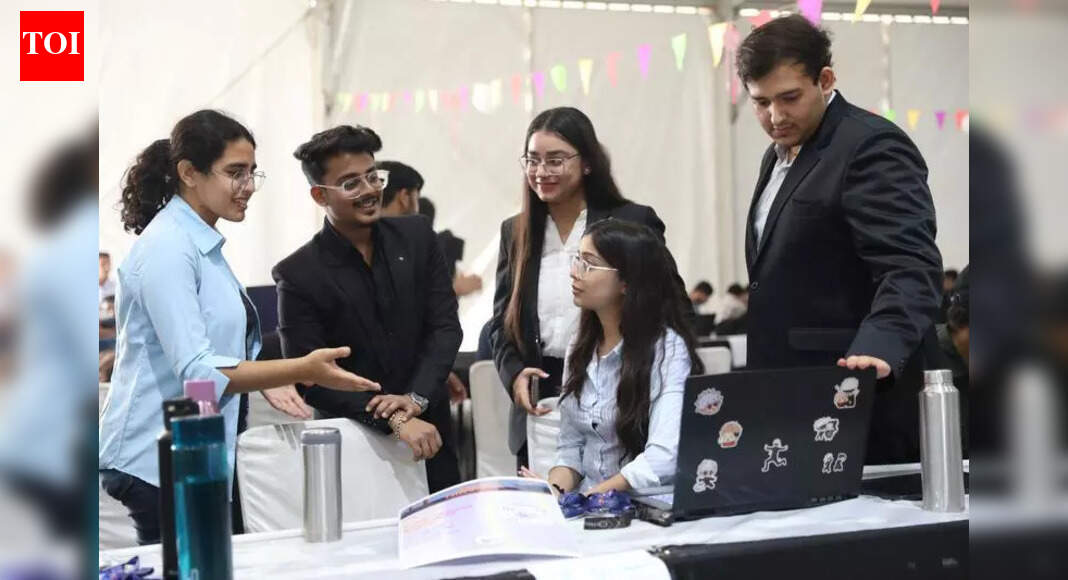
Bennett University recently hosted the Global AI Summit 2025, a significant three-day event held from November 19 to 21 on its campus in Greater Noida, India. The summit convened leading experts, researchers, and industry pioneers to discuss the future of artificial intelligence (AI) and its implications for various sectors. With the global AI market projected to exceed $1.8 trillion by 2030, the conference aimed to establish a definitive agenda for India’s role on the international stage.
The summit commenced with a formal opening ceremony featuring addresses from Bennett University leadership and esteemed guests from major corporations, including Microsoft and Apple. A key moment was the signing of a memorandum of understanding between Bennett University and the University of Exeter, a move that underscores the importance of enhancing international cooperation and learning.
Global Expertise Meets Local Innovation
The event attracted a prestigious lineup of speakers, including academics from renowned institutions such as Northwestern University, Sussex University, and Swinburne University of Technology. This blend of global expertise and national strength was further exemplified by the participation of experts from India’s leading institutions, including the Indian Institutes of Technology (IITs) and National Institutes of Technology (NITs), who chaired various sessions.
One of the standout features was Project Showcase 2.0, an exhibition that highlighted over 100 cutting-edge student projects across more than five tracks. This event attracted an audience of over 600 participants, showcasing the immense potential of the next generation of AI developers. The technical tracks included rigorous research presentations, with only 295 papers accepted from more than 1,850 global submissions. These papers, covering critical topics such as AI in cybersecurity, deep learning in healthcare, and quantum-inspired systems, are set for publication in the Institute of Electrical and Electronics Engineers (IEEE) Xplore, with indexing by SCOPUS.
The second day shifted focus to the real-world applications of AI, featuring keynote addresses from global organizations discussing the ethical and strategic deployment of AI across key sectors including cybersecurity, healthcare, and governance. Industry leaders from Google presented their latest revolutionary AI models, further enriching the discourse.
Championing Diversity and Innovation
The summit also emphasized inclusivity, hosting the IEEE Women in Engineering Meet & Greet, which highlighted the importance of diversity in the tech field. On the final day, a high-impact panel discussion featured leaders from major companies such as Pepsico, Hitachi’s GlobalLogic, and Tata Consultancy Services. They explored emerging trends and the organizational impacts of AI technologies, providing valuable insights into the future landscape.
By bringing together global academic excellence and corporate innovation, the Global AI Summit has solidified Bennett University’s role as a key player in the ongoing dialogue about responsible and impactful technological progress. The university continues to position itself at the forefront of AI research, shaping the future of this transformative field.

Airbus Discovers Quality Issue Affecting A320 Family Aircraft

Awami League Condemns Dhaka Court Ruling Against Sheikh Hasina

Supreme Court Denies Extension for Waqf Property Registration

Samantha Ruth Prabhu Weds Raj Nidimoru in Intimate Ceremony

Discover Engaging Ways to Stay Active Outside the Gym

Delhi High Court Sets Deadline for Government, CCI on Apple Fine

Charges Filed Against Sushil Kumar in IGP Bribery Case

BSF Foils Four Infiltration Attempts, Neutralizes Eight Terrorists

New Tax Bill Targets Pan Masala, Gutkha to Fund Health and Defence

SBI Announces QIP Floor Price at ₹811.05 Per Share

Cept Unveils ₹3.1 Crore Urban Mobility Plan for Sustainable Growth

New Blood Group Discovered in South Indian Woman at Rotary Centre

Torrential Rains Cause Flash Flooding in New York and New Jersey

Konkani Cultural Organisation to Host Pearl Jubilee in Abu Dhabi

Broad Advocates for Bowling Change Ahead of Final Test Against India

Nothing Headphone 1 Review: A Bold Contender in Audio Design

Air India Crash Investigation Highlights Boeing Fuel Switch Concerns

Indian Stock Market Rebounds: Sensex and Nifty Rise After Four-Day Decline
-
 World5 months ago
SBI Announces QIP Floor Price at ₹811.05 Per Share
-
 Lifestyle5 months ago
Cept Unveils ₹3.1 Crore Urban Mobility Plan for Sustainable Growth
-
 Science4 months ago
New Blood Group Discovered in South Indian Woman at Rotary Centre
-
 World5 months ago
Torrential Rains Cause Flash Flooding in New York and New Jersey
-
 Top Stories5 months ago
Konkani Cultural Organisation to Host Pearl Jubilee in Abu Dhabi
-
 Sports4 months ago
Broad Advocates for Bowling Change Ahead of Final Test Against India
-
 Science5 months ago
Nothing Headphone 1 Review: A Bold Contender in Audio Design
-
 Top Stories5 months ago
Air India Crash Investigation Highlights Boeing Fuel Switch Concerns
-
 Business5 months ago
Indian Stock Market Rebounds: Sensex and Nifty Rise After Four-Day Decline
-

 Sports4 months ago
Cristian Totti Retires at 19: Pressure of Fame Takes Toll
-

 Politics5 months ago
Abandoned Doberman Finds New Home After Journey to Prague
-

 Top Stories5 months ago
Patna Bank Manager Abhishek Varun Found Dead in Well