
Politics
Supreme Court Upholds Presidential Reference Amid Opposition Objections

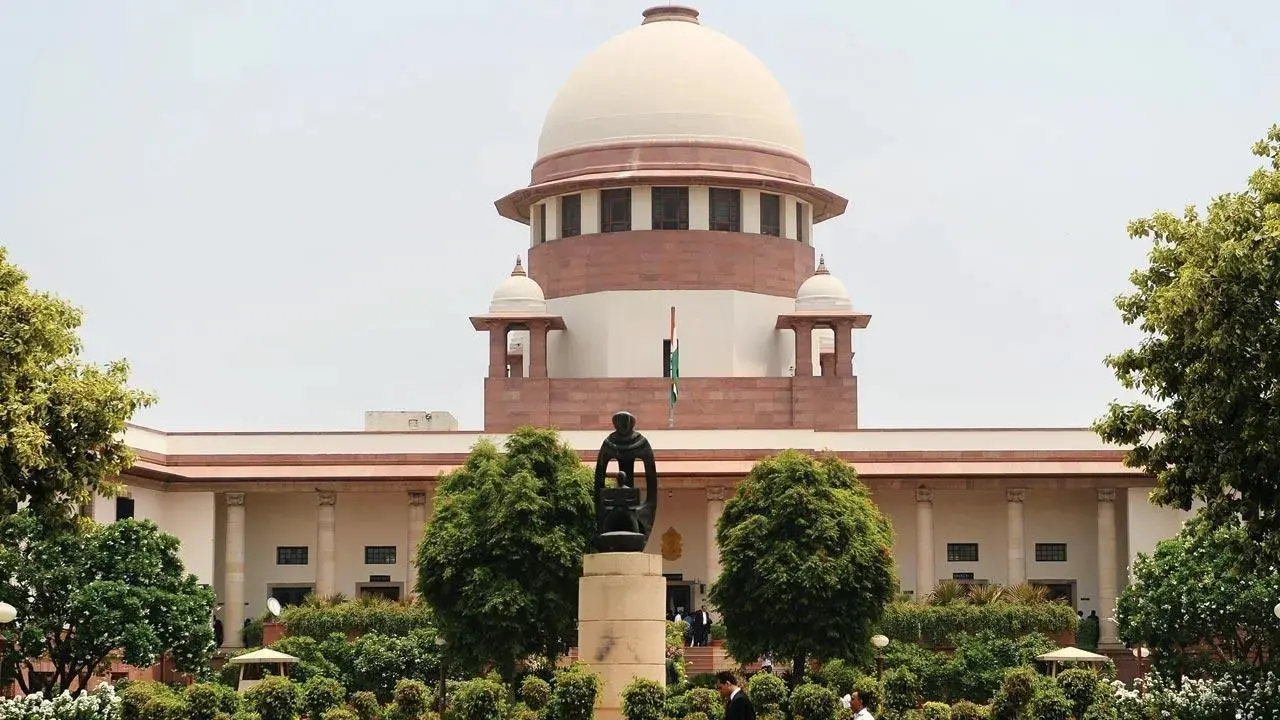
The Supreme Court of India rejected objections raised by several opposition-ruled states regarding the maintainability of a Presidential Reference on October 5, 2023. States including Tamil Nadu, West Bengal, and Kerala contended that the issues in the reference were already addressed in a previous verdict. However, a five-judge bench, led by Chief Justice B R Gavai, asserted that the matters at hand are crucial to the operational framework of the constitutional machinery.
In its ruling, the court emphasized the unique advisory role it holds, stating that the “power to interpret the Constitution” is a responsibility that lies solely with the judiciary. The bench declared, “The questions referred by the President pertain to the core, foundational modalities of our constitutional machinery, which ensure the continuation of our republican democracy and governance by elected representatives.” It stressed that the significance of these questions cannot be overstated, reaffirming the court’s duty under Article 143 to address such inquiries.
The bench, which also included Justices Surya Kant, Vikram Nath, P S Narasimha, and A S Chandurkar, dismissed claims that the reference should be returned unanswered. The court noted that previous references, with the exception of one in 1993, had been addressed in part or in full, reinforcing the notion that this reference warrants a thorough examination.
Judicial Responsibility and Constitutional Dialogue
The Supreme Court underscored that its advisory function represents a constitutional dialogue between the executive and judiciary. It acknowledged the need to clarify the roles of constitutional institutions when doubts arise regarding their powers. The bench further indicated that the presidential reference is fundamentally distinct from previous ones, as it addresses the core functionalities of constitutional governance.
The court remarked that none of the earlier presidential references had addressed the daily operations of constitutional entities, including the interactions between state legislatures, governors, and the President concerning legislative enactments. This current reference, according to the bench, stems from a state of confusion following a ruling by a two-judge bench on April 8, 2025, which had implications for the roles of governors and the President under Article 200 and Article 201.
In concluding its remarks, the Supreme Court affirmed that an authoritative opinion is essential to eliminate confusion around these constitutional roles, asserting that clarity is vital for the smooth operation of governance. The bench’s unanimous decision highlights the court’s commitment to addressing issues that impact the fundamental principles of India’s democratic framework.

Swiss Voters Reject Hefty Inheritance Tax Amid Public Opposition

Archaeologists Uncover 2,000-Year-Old Papyrus in Egyptian Coffin

Bijan Robinson Dominates Week 13, Davante Adams Sets New Record

Stockton Mass Shooting Claims Four Lives; Mayor Issues Stark Warning

Health Insights for December 1, 2025: Wellness Predictions for All Signs

Indian Government Supports Air Passengers in ₹50,000 Crore Suit

Shehbaz Badesha Eliminated from Bigg Boss 19; Amaal Mallik Reacts

India to Introduce New Cess on Tobacco and Pan Masala Products

Ram Kamal Mukherjee Celebrates Cinema at IFFI 2025

SBI Announces QIP Floor Price at ₹811.05 Per Share

Cept Unveils ₹3.1 Crore Urban Mobility Plan for Sustainable Growth

New Blood Group Discovered in South Indian Woman at Rotary Centre

Torrential Rains Cause Flash Flooding in New York and New Jersey

Konkani Cultural Organisation to Host Pearl Jubilee in Abu Dhabi

Broad Advocates for Bowling Change Ahead of Final Test Against India

Nothing Headphone 1 Review: A Bold Contender in Audio Design

Air India Crash Investigation Highlights Boeing Fuel Switch Concerns

Indian Stock Market Rebounds: Sensex and Nifty Rise After Four-Day Decline
-
 World5 months ago
SBI Announces QIP Floor Price at ₹811.05 Per Share
-
 Lifestyle5 months ago
Cept Unveils ₹3.1 Crore Urban Mobility Plan for Sustainable Growth
-
 Science4 months ago
New Blood Group Discovered in South Indian Woman at Rotary Centre
-
 World5 months ago
Torrential Rains Cause Flash Flooding in New York and New Jersey
-
 Top Stories5 months ago
Konkani Cultural Organisation to Host Pearl Jubilee in Abu Dhabi
-
 Sports4 months ago
Broad Advocates for Bowling Change Ahead of Final Test Against India
-
 Science5 months ago
Nothing Headphone 1 Review: A Bold Contender in Audio Design
-
 Top Stories5 months ago
Air India Crash Investigation Highlights Boeing Fuel Switch Concerns
-
 Business5 months ago
Indian Stock Market Rebounds: Sensex and Nifty Rise After Four-Day Decline
-

 Sports4 months ago
Cristian Totti Retires at 19: Pressure of Fame Takes Toll
-

 Politics5 months ago
Abandoned Doberman Finds New Home After Journey to Prague
-
 Top Stories5 months ago
Patna Bank Manager Abhishek Varun Found Dead in Well