
Science
Modi Government Revamps NCERT Textbooks to Honor Ancient Indian Mathematicians


The Indian government has enacted a significant revision of school history textbooks, instructing the National Council of Educational Research and Training (NCERT) to eliminate historical inaccuracies. This initiative focuses on restoring recognition to India’s ancient contributions, particularly in mathematics and science. The revised textbooks will prominently feature renowned scholars such as Aryabhata, Brahmagupta, Bhaskara, and Baudhayana, who were instrumental in laying the foundations of modern mathematics long before similar developments occurred in the West.
The updated NCERT editions aim to provide a more accurate representation of India’s scientific heritage. According to officials, this change seeks to highlight India’s pioneering advancements in subjects like algebra, geometry, and trigonometry, which have historically been credited to European thinkers in conventional educational narratives.
Reviving India’s Intellectual Legacy
The revised textbooks will include comprehensive discussions on the following topics:
– Aryabhata‘s revolutionary concepts of zero and pi.
– Brahmagupta‘s early contributions to algebra and quadratic equations.
– Baudhayana‘s geometrical findings that predate the Pythagorean theorem.
– Bhaskara II‘s advanced methodologies that influenced later scientific advancements.
By incorporating these significant contributions into school curricula, NCERT aims to instill pride in India’s rich intellectual heritage and demonstrate how these early discoveries have shaped global scientific progress.
Education experts have praised this initiative as a vital correction of historical imbalances found in school textbooks. Dr. Ramesh Pokhriyal, former Education Minister, emphasized that India’s historical contributions to mathematics, astronomy, and medicine were “far ahead of their time and deserve rightful acknowledgment.”
Shifting Perspectives in Education
Historically, Indian educational materials have faced criticism for being overly Eurocentric, often attributing significant scientific discoveries to European figures while overlooking their origins in ancient India. The new NCERT textbooks represent a paradigm shift, positioning India as a leader in knowledge rather than merely a recipient of Western influences.
Students from Classes 6 to 12 will soon encounter these changes in upcoming NCERT editions. The revised content will feature:
– Illustrative examples of ancient Indian mathematical practices.
– Comparative timelines illustrating global scientific evolution.
– Contextual notes that emphasize India’s influence on subsequent civilizations.
This initiative is part of the Modi government’s broader strategy to rekindle civilizational confidence and foster national pride through education. By reintegrating India’s ancient knowledge systems into contemporary learning, the new NCERT editions aspire to inspire future generations to rediscover the intellectual brilliance that once established India as the Vishwa Guru, or the teacher of the world.
The changes reflect a conscious effort to enhance students’ understanding of India’s historical significance in global science and mathematics, ensuring that these contributions receive the acknowledgment they merit.

India Seizes Opportunity to Redefine Global Economic Landscape

Major 4,670 BTC Transfer to Kraken Signals Market Movements

Arknights: Endfield Unveils Chen Qianyu in Thrilling Story Trailer

Surgeons Remove 15 kg Tumors from Woman in Complex Surgery

Zelensky Urges Inclusion of Europe in Peace Talks with Russia

Bill Bryson’s Masterful Science Writing Captivates Readers

WWE Uncovers Footage of Mystery Attacker from Survivor Series

New Challenges Await the Norris Family in Landman Season 2 Episode 4

Indian Actresses Choose Intimate Weddings Over Lavish Celebrations

SBI Announces QIP Floor Price at ₹811.05 Per Share

Cept Unveils ₹3.1 Crore Urban Mobility Plan for Sustainable Growth

New Blood Group Discovered in South Indian Woman at Rotary Centre

Torrential Rains Cause Flash Flooding in New York and New Jersey

Konkani Cultural Organisation to Host Pearl Jubilee in Abu Dhabi

Broad Advocates for Bowling Change Ahead of Final Test Against India

Nothing Headphone 1 Review: A Bold Contender in Audio Design

Air India Crash Investigation Highlights Boeing Fuel Switch Concerns

Indian Stock Market Rebounds: Sensex and Nifty Rise After Four-Day Decline
-
 World5 months ago
SBI Announces QIP Floor Price at ₹811.05 Per Share
-
 Lifestyle5 months ago
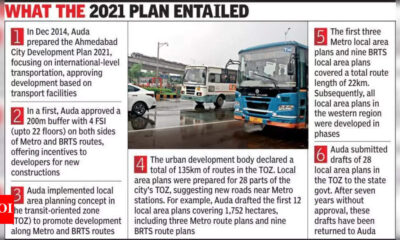
Cept Unveils ₹3.1 Crore Urban Mobility Plan for Sustainable Growth
-
 Science4 months ago
New Blood Group Discovered in South Indian Woman at Rotary Centre
-
 World5 months ago
Torrential Rains Cause Flash Flooding in New York and New Jersey
-
 Top Stories5 months ago
Konkani Cultural Organisation to Host Pearl Jubilee in Abu Dhabi
-
 Sports4 months ago
Broad Advocates for Bowling Change Ahead of Final Test Against India
-
 Science5 months ago
Nothing Headphone 1 Review: A Bold Contender in Audio Design
-
 Top Stories5 months ago
Air India Crash Investigation Highlights Boeing Fuel Switch Concerns
-
 Business5 months ago
Indian Stock Market Rebounds: Sensex and Nifty Rise After Four-Day Decline
-

 Sports4 months ago
Cristian Totti Retires at 19: Pressure of Fame Takes Toll
-

 Politics5 months ago
Abandoned Doberman Finds New Home After Journey to Prague
-

 Top Stories5 months ago
Patna Bank Manager Abhishek Varun Found Dead in Well