
Politics
US Supreme Court to Review Trump’s Executive Order on Citizenship

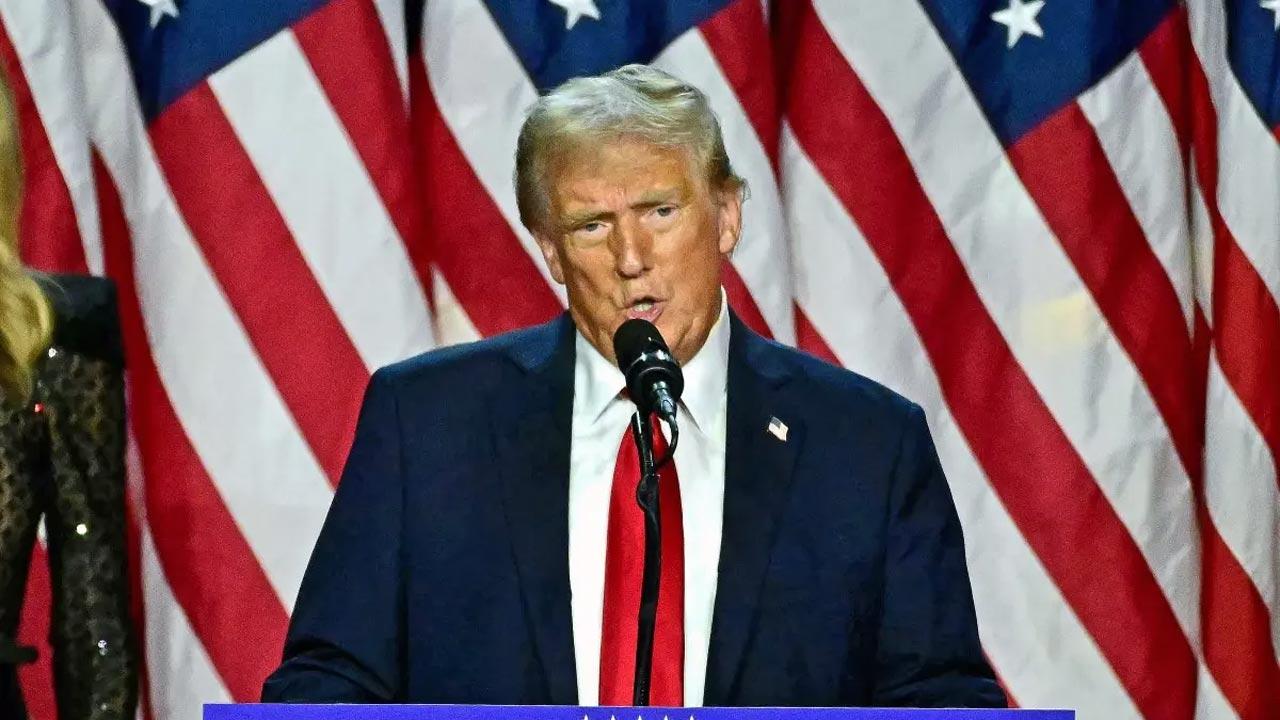
The US Supreme Court has agreed to examine the constitutionality of an executive order issued by former President Donald Trump that seeks to end birthright citizenship for children born on American soil. This decision marks a significant reopening of a debate that has largely been considered settled since the late 19th century. The court’s willingness to take on this appeal indicates a shift from its earlier focus on procedural issues related to lower court rulings, allowing it to directly assess the legality of the policy itself.
In a statement, Cecillia Wang, National Legal Director of the American Civil Liberties Union (ACLU), expressed optimism about the court’s review. “We look forward to the Supreme Court putting this issue to rest once and for all,” she said. Wang emphasized that federal courts have consistently upheld that Trump’s executive order contradicts both the Constitution and established legal precedent, specifically referencing a Supreme Court decision from 1898.
The arguments presented by the Trump administration have been largely dismissed as fringe interpretations, even among some conservative legal scholars. The case represents a crucial test of the court’s readiness to evaluate aggressive legal stances put forth by the White House. A ruling in favor of Trump could fundamentally alter a core principle of US constitutional and immigration law, potentially impacting how citizenship is documented for newborns in the United States.
The court is scheduled to hear the case in 2024, with a ruling expected by the end of June. Legal analysts, including Steve Vladeck, a professor at Georgetown University Law Center, have criticized the administration’s position. He argues that the attempt to restrict birthright citizenship through executive order is misguided. “It violates the relevant statutes, the Fourteenth Amendment itself, or the Supreme Court’s authoritative interpretation from 1898,” Vladeck stated.
The landmark ruling in US v. Wong Kim Ark established that individuals born within US borders are citizens, with very few exceptions. The Trump administration contends that this interpretation has been misapplied for over a century. In its filings, the administration contended that the understanding of the citizenship clause “was mistaken” and claimed it had “destructive consequences.”
Solicitor General D. John Sauer argued that the citizenship clause of the Fourteenth Amendment was originally intended to protect formerly enslaved individuals and their descendants, not the children of temporary visitors or undocumented immigrants. This assertion has sparked widespread debate about the implications of redefining citizenship in the United States.
Earlier this year, the Supreme Court issued a ruling concerning Trump’s immigration policies, which focused on the procedural authority of lower courts to block presidential actions. In a narrow 6-3 decision, the court limited but did not eliminate the ability of lower courts to intervene in such matters, setting the stage for this upcoming review of the birthright citizenship issue.
As the Supreme Court prepares to tackle this contentious topic, the implications of its decision could resonate far beyond legal circles, affecting countless families and the foundational principles of citizenship in America.

Dakota Johnson Discusses Complex Journey in Hollywood at Festival

Rujuta Diwekar Challenges Anti-Aging Standards in New Video

Discover Indigo’s Revival at Hampi Art Labs’ ‘Blue Futures’ Exhibit

Petro Condemns U.S. Military Presence, Calls for Latin Unity

Scientists Explore Feasibility of Human Life on the Moon by 2026

India Love Sparks Controversy at The Streamer Awards 2025

Explore the Spiritual Power of Anuradha Nakshatra in Love

Discover 10 Transformative Lessons from Martha Beck’s ‘Beyond Anxiety’

Fitness Coach Shares Effective Tips to Lose 1 kg Weekly Before 2026

SBI Announces QIP Floor Price at ₹811.05 Per Share

Cept Unveils ₹3.1 Crore Urban Mobility Plan for Sustainable Growth

New Blood Group Discovered in South Indian Woman at Rotary Centre

Torrential Rains Cause Flash Flooding in New York and New Jersey

Konkani Cultural Organisation to Host Pearl Jubilee in Abu Dhabi

Broad Advocates for Bowling Change Ahead of Final Test Against India

Nothing Headphone 1 Review: A Bold Contender in Audio Design

Air India Crash Investigation Highlights Boeing Fuel Switch Concerns

Indian Stock Market Rebounds: Sensex and Nifty Rise After Four-Day Decline
-
 World5 months ago
SBI Announces QIP Floor Price at ₹811.05 Per Share
-
 Lifestyle5 months ago
Cept Unveils ₹3.1 Crore Urban Mobility Plan for Sustainable Growth
-
 Science4 months ago
New Blood Group Discovered in South Indian Woman at Rotary Centre
-
 World5 months ago
Torrential Rains Cause Flash Flooding in New York and New Jersey
-
 Top Stories5 months ago
Konkani Cultural Organisation to Host Pearl Jubilee in Abu Dhabi
-
 Sports4 months ago
Broad Advocates for Bowling Change Ahead of Final Test Against India
-
 Science5 months ago
Nothing Headphone 1 Review: A Bold Contender in Audio Design
-
 Top Stories5 months ago
Air India Crash Investigation Highlights Boeing Fuel Switch Concerns
-
 Business5 months ago
Indian Stock Market Rebounds: Sensex and Nifty Rise After Four-Day Decline
-

 Sports4 months ago
Cristian Totti Retires at 19: Pressure of Fame Takes Toll
-

 Politics5 months ago
Abandoned Doberman Finds New Home After Journey to Prague
-
 Top Stories5 months ago
Patna Bank Manager Abhishek Varun Found Dead in Well