
Politics
India Develops Sea-Based Missile Defence to Counter Threats

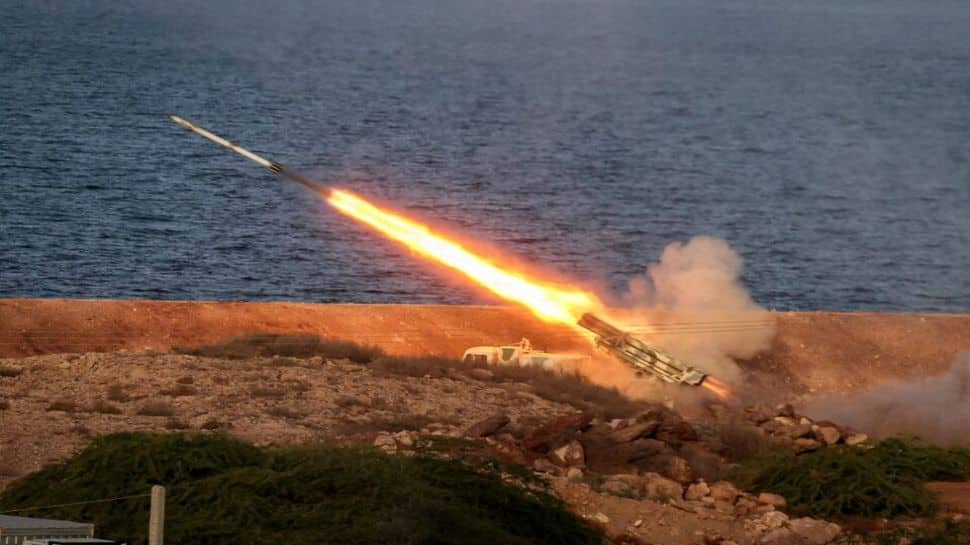
India is advancing its military capabilities with the development of a sea-based Ballistic Missile Defence (BMD) system, termed a “floating missile wall” by senior officials. This initiative, spearheaded by the Indian Navy in collaboration with the Defence Research and Development Organisation (DRDO), aims to intercept enemy missiles before they can reach the Indian coastline. The urgency of this project has increased due to China’s deployment of the DF-21 “carrier-killer” missiles and Pakistan’s advancements in its Ababeel missile system.
Engineers are currently working on ship-compatible versions of the AD-1 and AD-2 interceptors, designed to operate at hypersonic speeds and target incoming ballistic missiles with ranges of up to 5,000 kilometres. The objective is to establish this missile shield across key strategic locations in the Arabian Sea and the Bay of Bengal, with a projected operational timeline set for 2027.
A New Era of Defence Strategy
The shift from land-based defensive systems to naval platforms signifies a fundamental change in India’s defence strategy. The sea-based component of Phase-II BMD is now central to this transformation. Sources indicate that lighter variants of the AD-1 and AD-2 interceptors are being developed for direct installation on warships. These interceptors promise enhanced speed and agility compared to their land-based counterparts. The new strategy allows for the interception of ballistic warheads in mid-air, prior to their descent towards populated areas.
The AD-1 interceptor is engineered to engage targets within the atmosphere, reaching altitudes of approximately 150 kilometres. Weighing about one ton, it focuses on destroying missiles during their endo-atmospheric phase. Conversely, the AD-2 targets missiles at higher altitudes, capable of countering threats traveling at speeds between Mach 6 and Mach 7 during their mid-course phase.
Innovative Launch Systems and Testing
India is also developing a canister-based vertical hot-launch system, akin to the architecture used in the United States’ THAAD programme. This system will enable the rapid deployment of missiles from ships without necessitating extensive redesigns. Once operational, these warships will serve as mobile air-defence platforms, enhancing India’s capability to neutralize incoming threats.
A significant milestone was achieved on July 24, 2024, when an AD-1 variant successfully destroyed a mock medium-range ballistic missile in under four minutes during a high-speed test at the Chandipur range. Data from integrated sea- and land-based radar networks facilitated the operation, providing a comprehensive rehearsal for the sea BMD network.
As both China and Pakistan enhance their missile arsenals and hypersonic capabilities, Indian scientists are focusing on advanced seeker technology and hit-to-kill mechanisms. The aim is to intercept multiple independently targetable re-entry vehicles (MIRVs) before they penetrate Indian airspace.
The backbone of this sea-based BMD system is a sophisticated long-range radar network. India is investing in over-the-horizon radars capable of tracking objects beyond 1,500 kilometres. In tandem, Indian warships are being equipped with new X-band and S-band Active Electronically Scanned Array (AESA) radars, while floating test-range vessels gather data to refine targeting methods.
Public information indicates that Phase-II of the sea-based BMD is expected to be operational by 2027. Subsequently, Phase-III will focus on countering missiles with ranges exceeding 5,000 kilometres, extending capabilities into the realm of intercontinental ballistic missiles (ICBMs).
India’s evolving maritime defence strategy signifies a proactive stance against potential missile threats, transforming its naval forces into formidable platforms capable of intercepting and neutralizing ballistic missiles mid-flight. As regional adversaries expand their missile programs, India is committed to establishing a robust sea-based barrier that will be challenging to breach in the coming years.

New Episode of The Mighty Nein Premieres December 10, 2025

Patients Embrace Digital Records, Leaving Paper Behind

Bhavnagar Cybercrime Gang Launders Rs 719 Crore to Dubai, Ten Arrested

India Develops Sea-Based Missile Defence to Counter Threats

AI Model Achieves 99% Accuracy in Predicting Kidney Disease

Magnus Carlsen Triumphs in Unconventional Showdown Against Frode Elsness

Punjab Court Responds to Amritpal Singh’s Challenge Against Detention

Government Launches Inquiry into IndiGo Flight Disruptions

Karnataka Government Faces Fiscal Crisis Amid GST Revisions

SBI Announces QIP Floor Price at ₹811.05 Per Share

Cept Unveils ₹3.1 Crore Urban Mobility Plan for Sustainable Growth

New Blood Group Discovered in South Indian Woman at Rotary Centre

Torrential Rains Cause Flash Flooding in New York and New Jersey

Konkani Cultural Organisation to Host Pearl Jubilee in Abu Dhabi

Broad Advocates for Bowling Change Ahead of Final Test Against India

Nothing Headphone 1 Review: A Bold Contender in Audio Design

Air India Crash Investigation Highlights Boeing Fuel Switch Concerns

Indian Stock Market Rebounds: Sensex and Nifty Rise After Four-Day Decline
-
 World5 months ago
SBI Announces QIP Floor Price at ₹811.05 Per Share
-
 Lifestyle5 months ago
Cept Unveils ₹3.1 Crore Urban Mobility Plan for Sustainable Growth
-
 Science4 months ago
New Blood Group Discovered in South Indian Woman at Rotary Centre
-
 World5 months ago
Torrential Rains Cause Flash Flooding in New York and New Jersey
-
 Top Stories5 months ago
Konkani Cultural Organisation to Host Pearl Jubilee in Abu Dhabi
-
 Sports4 months ago
Broad Advocates for Bowling Change Ahead of Final Test Against India
-
 Science5 months ago
Nothing Headphone 1 Review: A Bold Contender in Audio Design
-
 Top Stories5 months ago
Air India Crash Investigation Highlights Boeing Fuel Switch Concerns
-
 Business5 months ago
Indian Stock Market Rebounds: Sensex and Nifty Rise After Four-Day Decline
-

 Sports4 months ago
Cristian Totti Retires at 19: Pressure of Fame Takes Toll
-

 Politics5 months ago
Abandoned Doberman Finds New Home After Journey to Prague
-

 Top Stories5 months ago
Patna Bank Manager Abhishek Varun Found Dead in Well