
Business
Goyal Advocates Innovation for Manufacturing Amid Export Challenges

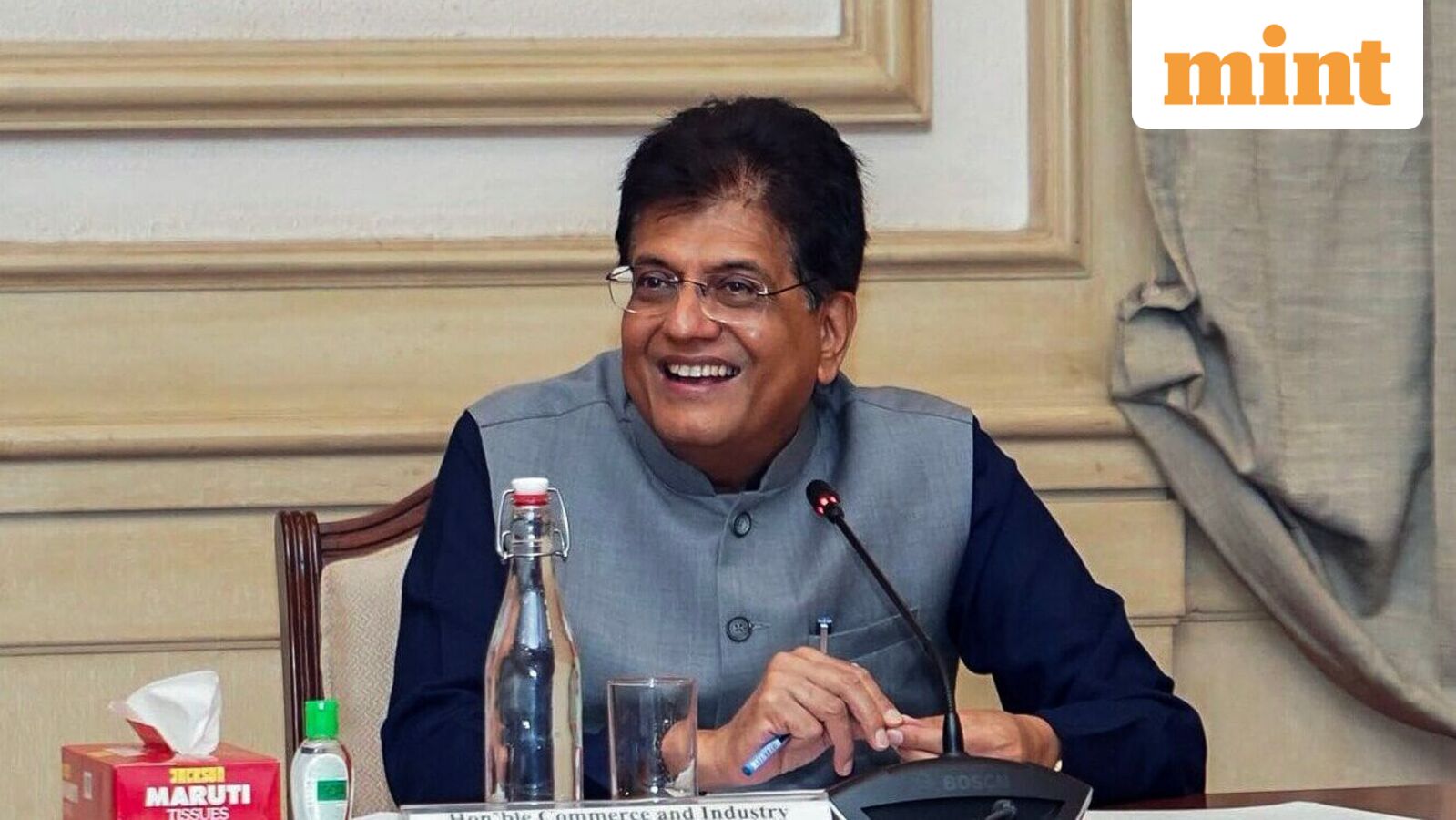
Commerce and Industry Minister Piyush Goyal emphasized the importance of innovation and technology in driving India’s manufacturing sector during his address at the CII India Edge 2025 event in New Delhi. Goyal highlighted that flexibility and robust supply chains are crucial as India aims for its vision of Viksit Bharat 2047. His remarks come in the wake of recent data indicating a slowdown in manufacturing activity, raising concerns among industry stakeholders.
The HSBC India Manufacturing Purchasing Managers’ Index (PMI) saw a decline to 56.6 in November from 59.2 in October, marking the slowest expansion since February. A PMI reading above 50 denotes growth, suggesting that the manufacturing sector is facing headwinds. Analysts attribute this downturn partly to increased tariffs imposed by the United States, which appear to be impacting demand.
While discussing India’s export performance, Goyal noted a recovery following a significant contraction in October, when merchandise exports fell by 11.8% due to the high tariffs. He announced a rebound in November, asserting that the export figures for that month would show a greater increase than the decline experienced in October. Official trade data is expected to be published on December 15, 2023.
“Merchandise exports went down in October. Incidentally, November has gone up by a greater amount than what went down in October,” Goyal stated, emphasizing that despite global economic challenges, there is still growth in exports when aggregating the two months.
The contraction in exports during October contributed to India’s trade deficit widening to a record $41.68 billion. This was exacerbated by a notable increase in gold imports. From April to October of the current fiscal year, exports saw a marginal increase of 0.63% to $254.25 billion, while imports rose by 6.37% to $451.08 billion.
Goyal reiterated that India is actively pursuing deeper integration with global trading partners. He hinted at forthcoming announcements regarding successful negotiations with major economies, as India works on several Free Trade Agreements (FTAs) with the European Union, the United States, New Zealand, Oman, Chile, and Peru.
In response to questions about the Indian rupee, which recently hit a record low of 90.15 against the US dollar, Goyal asserted that the overall economic outlook remains strong. He pointed to an 8.2% growth in GDP for the second quarter, along with easing inflation, stable foreign exchange reserves, and strong capital inflows as indicators of resilience despite currency pressures.
“Innovation must now be at the centre of India’s manufacturing push, as it is vital for self-reliance across a wide range of products,” Goyal concluded. He emphasized that stronger control over supply chains would enable the Indian industry to better withstand global shocks and enhance competitiveness.
Despite the focus on innovation, some industry leaders and experts have expressed concerns regarding the slowing export sector. Ajay Srivastava, co-founder of the Global Trade Research Initiative (GTRI), noted that while recent GDP figures appear positive, they obscure the reality of a faltering export engine. He highlighted that exports contribute approximately 20% to the economy, yet their impact on job creation and investment is significantly greater.
“Labour-intensive sectors like garments, seafood, and gems are being squeezed by high US tariffs, stricter EU regulations, and rising protectionism,” Srivastava warned, indicating a potential divergence in economic growth between services and export-driven manufacturing.
Echoing these sentiments, Narayan Sethuramon of the CII Trade Policy Council called for enhanced collaborations between industry and government. He advocated for the establishment of early-warning systems to address supply-chain risks and an accelerated adoption of global standards.
“India needs to improve its trade ecosystem across several areas,” Sethuramon stated, underscoring the importance of targeted incentives and aligning with global demand trends to foster a more competitive environment for exporters.
During this critical period, CII president Rajiv Memani stressed the need for focused reforms to enhance competitiveness and suggested that India closely study its import patterns to identify sectors where domestic value addition can be accelerated. He emphasized that aligning incentives with global market trends is essential for the next phase of India’s economic growth.

Dakota Johnson Discusses Complex Journey in Hollywood at Festival

Rujuta Diwekar Challenges Anti-Aging Standards in New Video

Discover Indigo’s Revival at Hampi Art Labs’ ‘Blue Futures’ Exhibit

Petro Condemns U.S. Military Presence, Calls for Latin Unity

Scientists Explore Feasibility of Human Life on the Moon by 2026

India Love Sparks Controversy at The Streamer Awards 2025

Explore the Spiritual Power of Anuradha Nakshatra in Love

Discover 10 Transformative Lessons from Martha Beck’s ‘Beyond Anxiety’

Fitness Coach Shares Effective Tips to Lose 1 kg Weekly Before 2026

SBI Announces QIP Floor Price at ₹811.05 Per Share

Cept Unveils ₹3.1 Crore Urban Mobility Plan for Sustainable Growth

New Blood Group Discovered in South Indian Woman at Rotary Centre

Torrential Rains Cause Flash Flooding in New York and New Jersey

Konkani Cultural Organisation to Host Pearl Jubilee in Abu Dhabi

Broad Advocates for Bowling Change Ahead of Final Test Against India

Nothing Headphone 1 Review: A Bold Contender in Audio Design

Air India Crash Investigation Highlights Boeing Fuel Switch Concerns

Indian Stock Market Rebounds: Sensex and Nifty Rise After Four-Day Decline
-
 World5 months ago
SBI Announces QIP Floor Price at ₹811.05 Per Share
-
 Lifestyle5 months ago
Cept Unveils ₹3.1 Crore Urban Mobility Plan for Sustainable Growth
-
 Science4 months ago
New Blood Group Discovered in South Indian Woman at Rotary Centre
-
 World5 months ago
Torrential Rains Cause Flash Flooding in New York and New Jersey
-
 Top Stories5 months ago
Konkani Cultural Organisation to Host Pearl Jubilee in Abu Dhabi
-
 Sports4 months ago
Broad Advocates for Bowling Change Ahead of Final Test Against India
-
 Science5 months ago
Nothing Headphone 1 Review: A Bold Contender in Audio Design
-
 Top Stories5 months ago
Air India Crash Investigation Highlights Boeing Fuel Switch Concerns
-
 Business5 months ago
Indian Stock Market Rebounds: Sensex and Nifty Rise After Four-Day Decline
-

 Sports4 months ago
Cristian Totti Retires at 19: Pressure of Fame Takes Toll
-

 Politics5 months ago
Abandoned Doberman Finds New Home After Journey to Prague
-

 Top Stories5 months ago
Patna Bank Manager Abhishek Varun Found Dead in Well