
Business
Amit Shah Launches Bio-CNG Plant, Celebrates Dairy Success in Gujarat

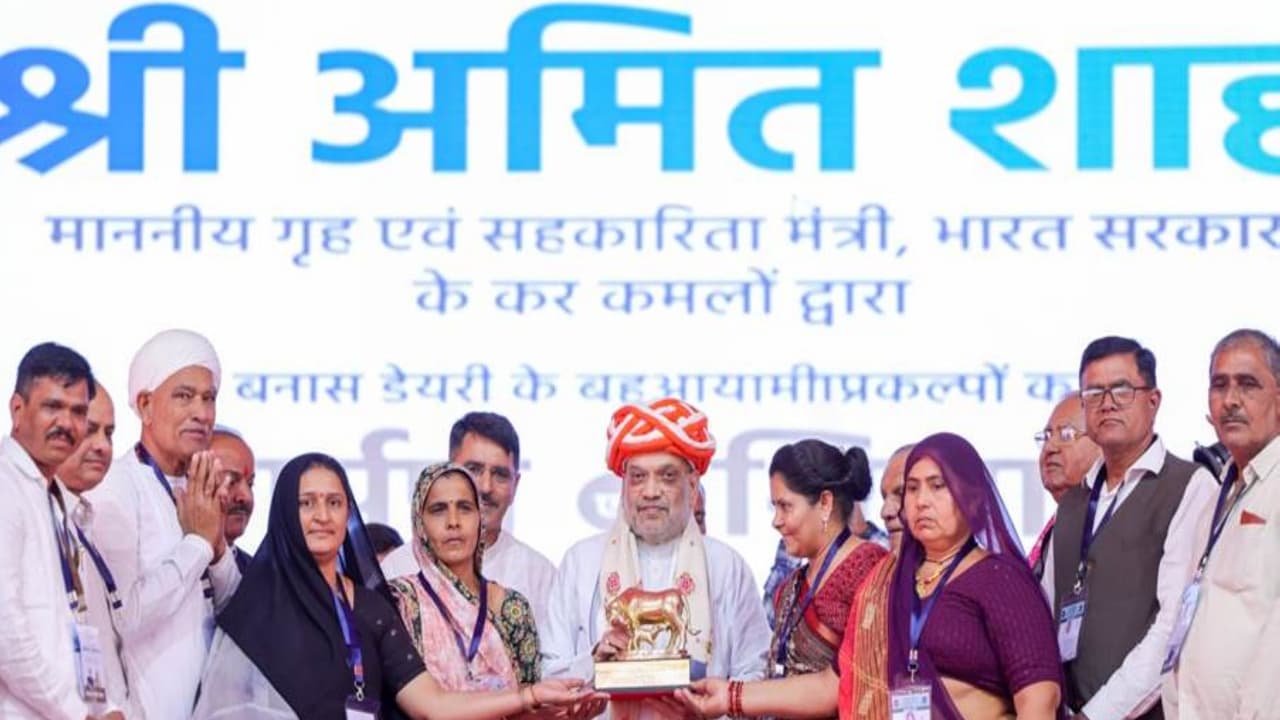
Union Home Minister Amit Shah inaugurated a new Bio-CNG and Fertiliser Plant at Banas Dairy in Vav-Tharad, Gujarat, on March 15, 2024. During the inauguration, Shah highlighted the dairy’s impressive annual turnover of Rs 24,000 crore, attributing this success to the women and farmers of the Banaskantha region. The event also marked the laying of the foundation stone for a 150-ton powder plant.
The inauguration was attended by notable figures, including Gujarat Assembly Speaker Shankar Chaudhary and Union Ministers of State for Cooperation Krishan Pal Gurjar and Murlidhar Mohol, among others. Shah emphasized the historical significance of Banas Dairy, which was founded by Galbabhai Nanjibhai Patel in 1960, starting with just eight villages. He expressed pride in the cooperative movement’s evolution, stating that it has achieved a remarkable turnover that would challenge even the largest corporations.
Transformation of Agriculture and Water Access
Shah reminisced about the challenges faced by farmers in the region during the drought years of 1985-87, when they could only cultivate a single crop annually. He noted that the agricultural landscape has transformed, with farmers now able to grow three crops each year. This transformation, he said, was made possible through initiatives like the Sujalam-Sufalam Scheme, which diverted surplus water from the Narmada and Mahi rivers to Banaskantha.
The Union Minister underlined the importance of documenting the region’s water conservation efforts, announcing that two universities have been tasked with researching the impact of these initiatives on local livelihoods. Shah expressed confidence that the hardworking farmers of Banaskantha would serve as an inspiration for rural development across India.
Empowerment of Women in the Dairy Sector
A significant highlight of the event was Shah’s acknowledgment of the vital role women play in the dairy industry. He noted that the collection of milk in the cooperative is predominantly managed by women, who have demonstrated exceptional dedication and resilience. According to Shah, this transparent system ensures that payments for milk reach the bank accounts of these women weekly, showcasing a model of empowerment that other regions can emulate.
Banas Dairy has grown to become Asia’s largest milk-producing cooperative, a legacy of its founder, Galbabhai Nanjibhai Patel. Shah praised Patel’s vision of community contributions, stating, “We may have little money, but we have a huge number of people.” This philosophy has fostered a cooperative environment that has significantly uplifted the community.
Shah also took a moment to pay tribute to Dr. Bhimrao Ambedkar on his death anniversary, recognizing the impact of the Constitution on ensuring dignity and respect for marginalized communities.
Future Initiatives and Circular Economy
During the event, Shah unveiled several new initiatives, including the Bio-CNG plant and a milk powder plant, as well as a state-of-the-art protein plant and a high-tech automated paneer plant. He emphasized the importance of transitioning the dairy sector to a circular economy, where not a single gram of agricultural waste goes to waste. Instead, byproducts like cow dung should be converted into organic manure, biogas, and electricity, benefiting farmers financially.
The Union Minister highlighted that many high-value dairy products, currently absent in India, are in high demand globally. He announced plans to create a list of these products for immediate production, aiming to significantly increase profits for farmers. The goal is not just to produce traditional dairy products but to expand into areas that can generate higher income.
Looking ahead, Shah shared the Government of India’s vision for the dairy sector, including the establishment of three national-level cooperatives focused on seed production, marketing organic products, and agricultural exports. These initiatives aim to enhance every aspect of agriculture and animal husbandry, ensuring that profits directly benefit livestock farmers.
Shah concluded by assuring the farmers of Banaskantha that within five years, they would see substantial benefits from their milk production, projecting at least a 20 percent increase in income through the circular economy model. He expressed optimism that Banas Dairy’s success would serve as a blueprint for cooperative movements across the country, contributing to the broader vision of White Revolution 2.0.
In a final note, Shah affirmed that the tradition established by Banas Dairy would extend beyond Banaskantha, fostering prosperity for livestock farmers throughout India.

Activists Aid Flood-Affected Farmers in Punjab’s Border Villages

Fire at Arpora Restaurant Claims 23 Lives, Investigation Launched

Indian Government Caps Domestic Airfares to Ensure Accessibility

“Kill Bill”: A Bold Challenge to Female Stereotypes in Action Cinema

Health Insights for December 7, 2025: Zodiac Predictions Unveiled

Trump Honors Sylvester Stallone, Gloria Gaynor, and Others at Kennedy Center Ceremony

Bethlehem Celebrates Christmas with Hopeful Tree Lighting

Protests Erupt in Washington Over U.S. Strikes on Venezuelan Boats

India’s Richest States Revealed: GDP and Income Rankings for 2025

SBI Announces QIP Floor Price at ₹811.05 Per Share

Cept Unveils ₹3.1 Crore Urban Mobility Plan for Sustainable Growth

New Blood Group Discovered in South Indian Woman at Rotary Centre

Torrential Rains Cause Flash Flooding in New York and New Jersey

Konkani Cultural Organisation to Host Pearl Jubilee in Abu Dhabi

Broad Advocates for Bowling Change Ahead of Final Test Against India

Nothing Headphone 1 Review: A Bold Contender in Audio Design

Air India Crash Investigation Highlights Boeing Fuel Switch Concerns

Indian Stock Market Rebounds: Sensex and Nifty Rise After Four-Day Decline
-
 World5 months ago
SBI Announces QIP Floor Price at ₹811.05 Per Share
-
 Lifestyle5 months ago
Cept Unveils ₹3.1 Crore Urban Mobility Plan for Sustainable Growth
-
 Science4 months ago
New Blood Group Discovered in South Indian Woman at Rotary Centre
-
 World5 months ago
Torrential Rains Cause Flash Flooding in New York and New Jersey
-
 Top Stories5 months ago
Konkani Cultural Organisation to Host Pearl Jubilee in Abu Dhabi
-
 Sports4 months ago
Broad Advocates for Bowling Change Ahead of Final Test Against India
-
 Science5 months ago
Nothing Headphone 1 Review: A Bold Contender in Audio Design
-
 Top Stories5 months ago
Air India Crash Investigation Highlights Boeing Fuel Switch Concerns
-
 Business5 months ago
Indian Stock Market Rebounds: Sensex and Nifty Rise After Four-Day Decline
-

 Sports4 months ago
Cristian Totti Retires at 19: Pressure of Fame Takes Toll
-

 Politics5 months ago
Abandoned Doberman Finds New Home After Journey to Prague
-

 Top Stories5 months ago
Patna Bank Manager Abhishek Varun Found Dead in Well