
Business
Finance Minister Calls for Market-Driven Approach as Rupee Hits ₹90

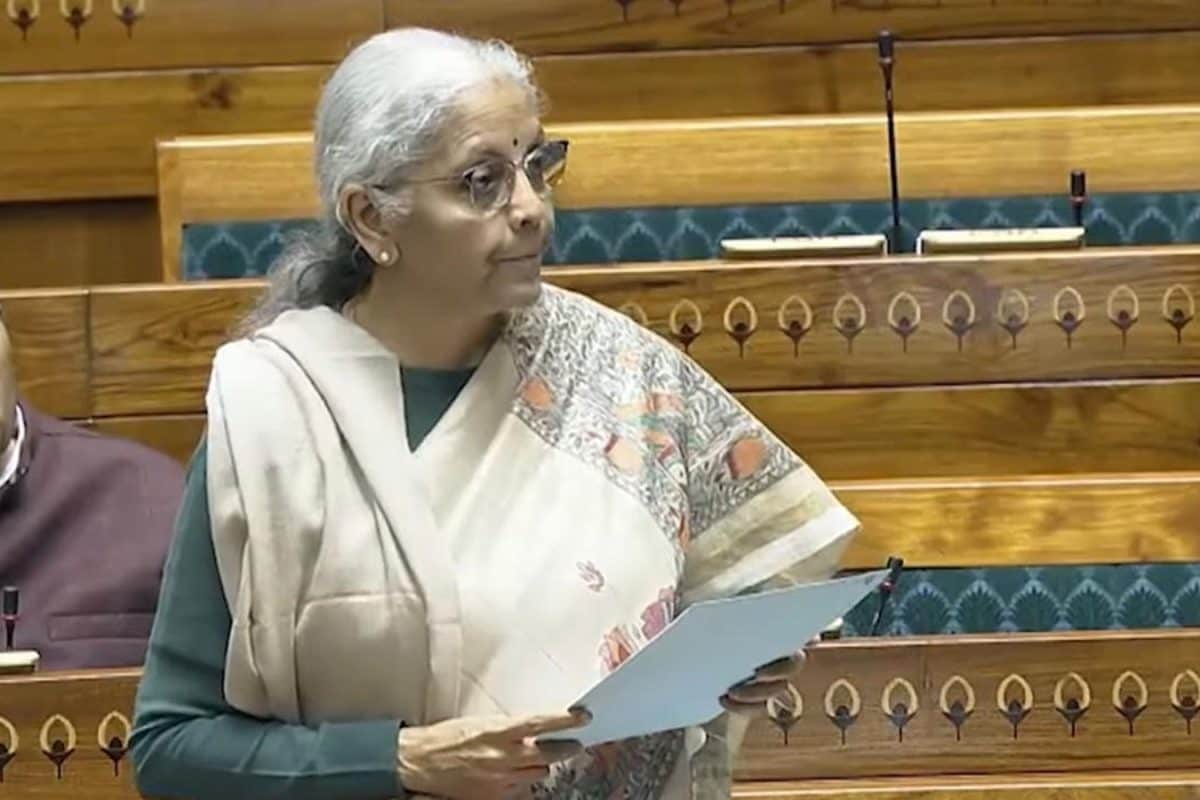
Finance Minister Nirmala Sitharaman addressed the recent decline of the Indian rupee, which reached a notable ₹90 against the US dollar, during the Hindustan Times Leadership Summit. She emphasized the importance of allowing the currency to remain market-driven, asserting that it must “find its own level” rather than be excessively managed by the government.
Sitharaman’s comments come as the rupee’s depreciation has sparked criticism from various quarters. During her speech, she remarked that exchange rates are “too sensitive” and should not be dictated by political influences. The Finance Minister urged observers to understand currency fluctuations within the context of India’s current economic fundamentals, which she believes are stronger than those of previous years.
“Today, the fundamentals of the economy are sorted,” she stated, pushing back against political comparisons with earlier times when her party was in opposition. Sitharaman insisted that the prevailing economic conditions warrant a reevaluation of how the rupee’s value is perceived.
While the rupee’s weakness has raised concerns, she noted that it can provide certain advantages for exporters. “When the rupee value comes down, I’m sure our exporters have started to capitalize on this,” she said, highlighting that a weaker currency can offer “some respite” during periods when tariffs negatively affect Indian products.
Sitharaman also addressed worries regarding the decline in household savings, clarifying that the data reflects changing savings patterns rather than an overall reduction. She asserted that “savings are growing, and so is investment today,” pointing out that while deposits in public banks or post office schemes might appear lower, total household assets continue to rise, driven by credit expansion.
The Finance Minister emphasized that the shift in savings to financial markets, digital instruments, and new investment products should not narrow the discussion on savings to traditional avenues alone. “We shouldn’t narrow the debate on savings to what’s going into public banks or post offices,” she added.
Despite the rupee’s drop to ₹90 against the dollar, Sitharaman maintained that India’s macroeconomic story remains robust. She reiterated that the currency’s movement should be understood within the broader context of the economy’s overall strength, encouraging a more holistic view of financial health rather than focusing solely on exchange rates.
The Minister’s remarks reflect a determined stance from the Indian government to foster a resilient economy that can withstand currency fluctuations while encouraging investment and growth. As the landscape evolves, the emphasis on market-driven mechanisms may play a crucial role in shaping India’s financial future.

Dakota Johnson Discusses Complex Journey in Hollywood at Festival

Rujuta Diwekar Challenges Anti-Aging Standards in New Video

Discover Indigo’s Revival at Hampi Art Labs’ ‘Blue Futures’ Exhibit

Petro Condemns U.S. Military Presence, Calls for Latin Unity

Scientists Explore Feasibility of Human Life on the Moon by 2026

India Love Sparks Controversy at The Streamer Awards 2025

Explore the Spiritual Power of Anuradha Nakshatra in Love

Discover 10 Transformative Lessons from Martha Beck’s ‘Beyond Anxiety’

Fitness Coach Shares Effective Tips to Lose 1 kg Weekly Before 2026

SBI Announces QIP Floor Price at ₹811.05 Per Share

Cept Unveils ₹3.1 Crore Urban Mobility Plan for Sustainable Growth

New Blood Group Discovered in South Indian Woman at Rotary Centre

Torrential Rains Cause Flash Flooding in New York and New Jersey

Konkani Cultural Organisation to Host Pearl Jubilee in Abu Dhabi

Broad Advocates for Bowling Change Ahead of Final Test Against India

Nothing Headphone 1 Review: A Bold Contender in Audio Design

Air India Crash Investigation Highlights Boeing Fuel Switch Concerns

Indian Stock Market Rebounds: Sensex and Nifty Rise After Four-Day Decline
-
 World5 months ago
SBI Announces QIP Floor Price at ₹811.05 Per Share
-
 Lifestyle5 months ago
Cept Unveils ₹3.1 Crore Urban Mobility Plan for Sustainable Growth
-
 Science4 months ago
New Blood Group Discovered in South Indian Woman at Rotary Centre
-
 World5 months ago
Torrential Rains Cause Flash Flooding in New York and New Jersey
-
 Top Stories5 months ago
Konkani Cultural Organisation to Host Pearl Jubilee in Abu Dhabi
-
 Sports4 months ago
Broad Advocates for Bowling Change Ahead of Final Test Against India
-
 Science5 months ago
Nothing Headphone 1 Review: A Bold Contender in Audio Design
-
 Top Stories5 months ago
Air India Crash Investigation Highlights Boeing Fuel Switch Concerns
-
 Business5 months ago
Indian Stock Market Rebounds: Sensex and Nifty Rise After Four-Day Decline
-

 Sports4 months ago
Cristian Totti Retires at 19: Pressure of Fame Takes Toll
-

 Politics5 months ago
Abandoned Doberman Finds New Home After Journey to Prague
-

 Top Stories5 months ago
Patna Bank Manager Abhishek Varun Found Dead in Well